BEYLA, Guinea – As Guinea’s flagship Simandou iron ore development advances toward full-scale production, strengthening local skills and employment remains a strategic priority. SimFer, the joint venture bringing together Government of Guinea, Rio Tinto, and Chinalco-led CIOH consortium, has reaffirmed its commitment to workforce development through an enhanced partnership with Guinean Agency for the Promotion of Employment (AGUIPE).
The commitment was highlighted during an official visit to SimFer’s mining operations in Beyla by AGUIPE Director General Antigou Chérif and Labour Inspector General Mohamed Ouattara. The delegation toured key mining infrastructure, training facilities, and operational sites, gaining first-hand insight into the company’s efforts to develop a skilled national workforce capable of supporting one of Africa’s largest mining projects.
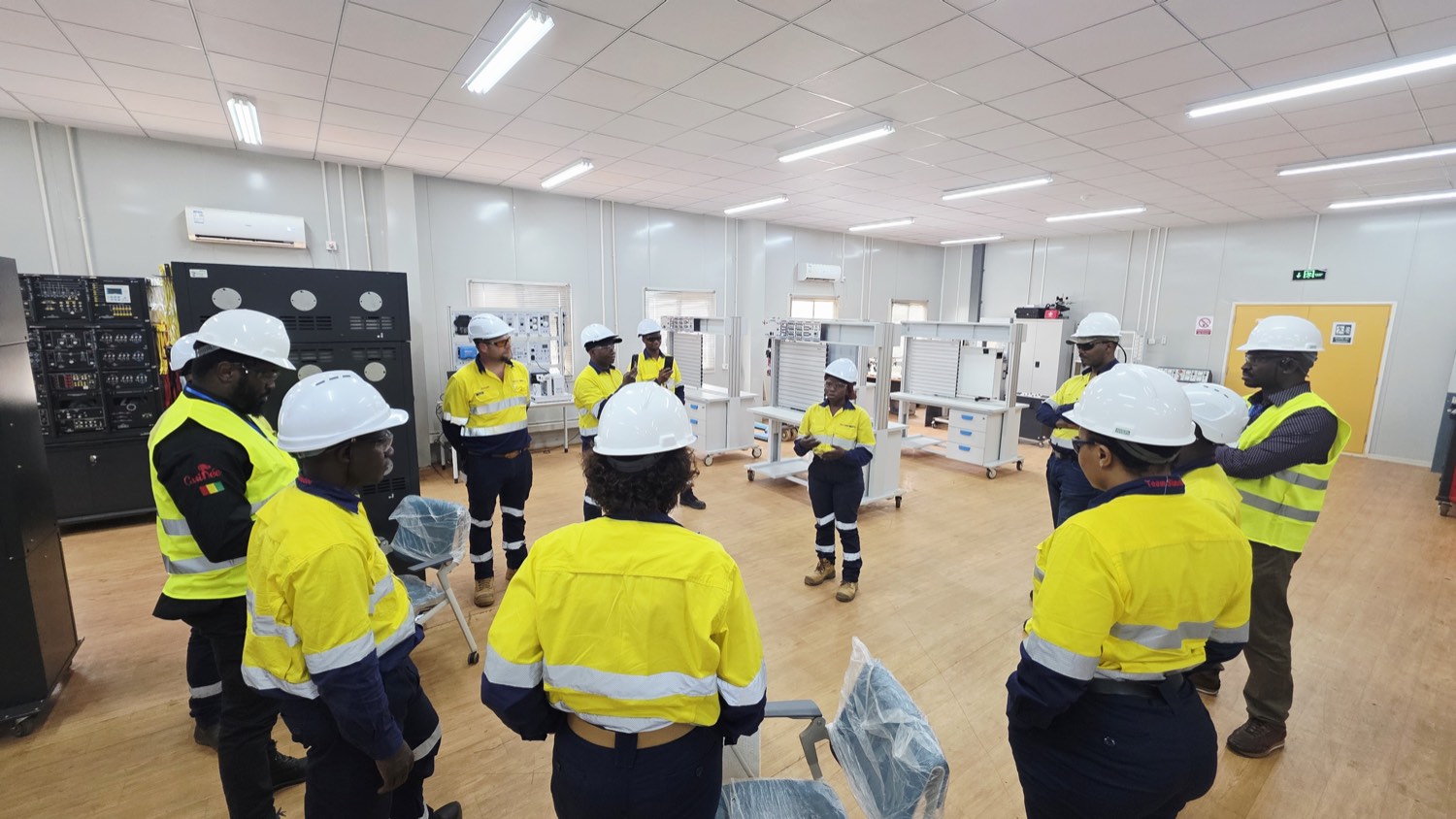
A central focus of the visit was SimFer’s investment in technical and vocational training. Officials visited the Technical Training Centre located at the mine site as well as the Vocational Training Centre in Beyla, both of which are designed to equip Guineans with the competencies required for long-term careers in mining and related industries.
The delegation also reviewed SimFer’s apprenticeship programmes and engaged directly with trainees and employees. These discussions provided an opportunity to assess how training initiatives are translating into employability and career development opportunities for young Guineans.
According to AGUIPE Director General Antigou Chérif, the programmes align closely with the government’s objectives of promoting employment, enhancing skills development, and increasing workforce participation in major industrial projects. He praised both the quality of the training facilities and the enthusiasm demonstrated by apprentices, emphasizing the importance of expanding such initiatives to reach a larger number of Guineans.
The visit extended beyond training facilities to include operational mining areas and the rail spur infrastructure associated with the Simandou project. This allowed government officials to evaluate the scale of ongoing construction activities and the measures implemented to ensure operational safety, regulatory compliance, and effective project management.
For SimFer, workforce development has become a cornerstone of its local content strategy. The company reports that more than 1,000 employees receive training every week through various programmes. Among these are 69 apprentices currently progressing through their second year of training, with women accounting for 26 percent of participants. An additional 85 apprentices are being enrolled, with female participation expected to reach 40 percent.
The company has backed these efforts with significant financial investment, including approximately US$20.8 million dedicated to the Technical Training Centres at Siatouro. These facilities are intended to support the long-term human capital needs of the Simandou project while creating transferable skills that can benefit Guinea’s wider economy.
Speaking during the visit, SimFer Human Resources General Manager Sabrina Marlier emphasized that developing local competencies is essential not only for the project’s operational success but also for increasing the employability of young Guineans. She highlighted the company’s objective of preparing a workforce capable of supporting the Simandou project throughout its lifecycle.
Industry Insight: From Infrastructure to Human Capital
The visit underscores an increasingly important trend in Guinea’s mining sector: the shift from infrastructure-focused investment toward human capital development. While the Simandou project is widely recognized for its massive rail, port, and mining infrastructure, its long-term legacy may ultimately be measured by the skills and employment opportunities it creates for Guineans.
For mining investors and operators, workforce localization is becoming a key indicator of project sustainability and social acceptance. The government’s Guineanization agenda seeks to ensure that major mining investments generate meaningful employment and leadership opportunities for national talent rather than relying predominantly on expatriate expertise.
SimFer’s apprenticeship programmes, technical training centres, and collaboration with AGUIPE demonstrate a practical approach to achieving these objectives. The increasing participation of women in apprenticeship programmes is also noteworthy, reflecting broader efforts across the mining industry to improve workforce diversity and inclusion.
As Simandou moves closer to becoming one of the world’s most significant iron ore operations, the success of partnerships such as that between SimFer and AGUIPE will play a critical role in determining how effectively the project translates mineral wealth into long-term socioeconomic benefits for Guinea. By investing in skills development today, the project is helping lay the foundation for a future generation of Guinean mining professionals, technicians, and industry leaders.
Share on social media

-