


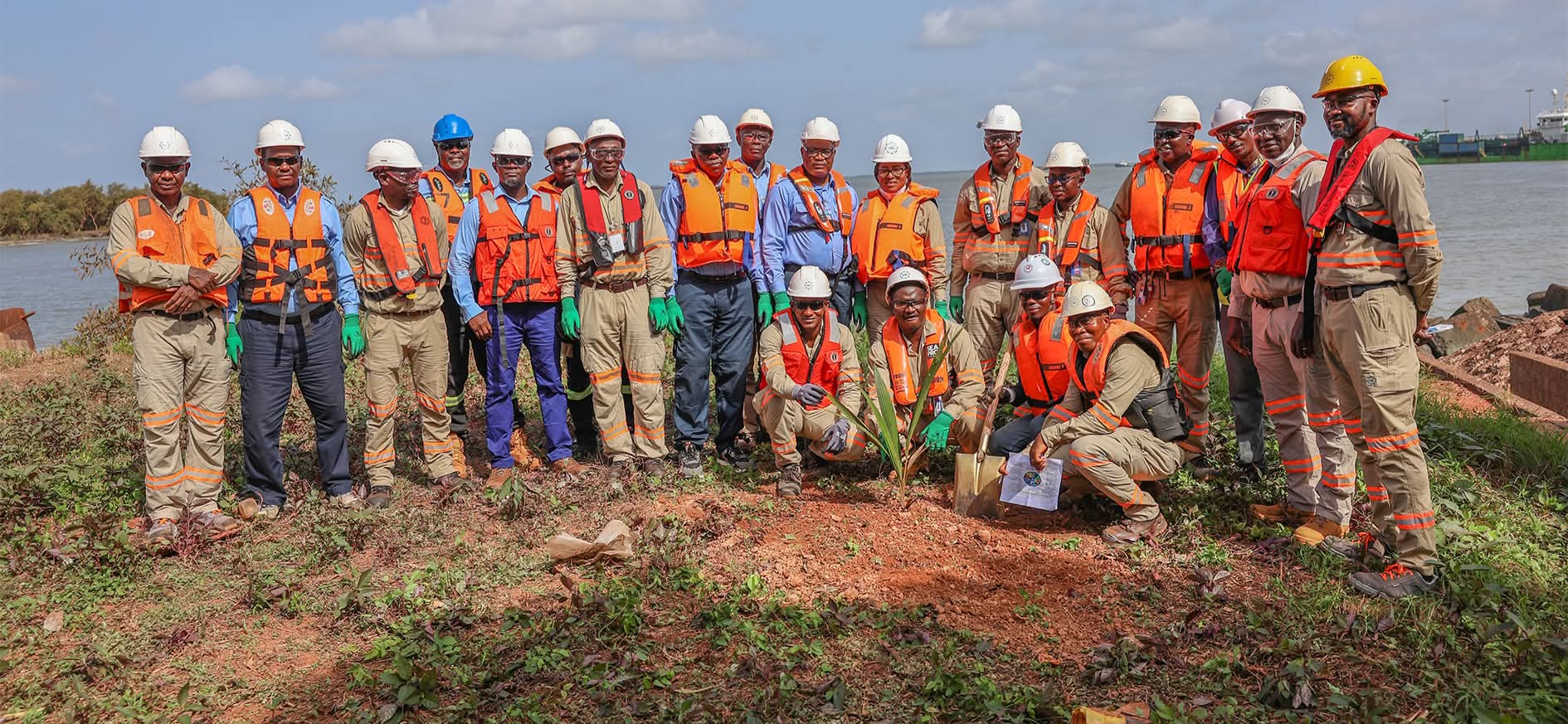
Marking World Environment Day 2026, the Compagnie des Bauxites de Guinée (CBG) has reaffirmed its commitment to environmental stewardship, emphasizing the growing responsibility of mining companies to balance industrial performance with sustainable resource management and climate action.
The statement was issued as this year’s World Environment Day is observed under the theme, “Rethinking the systems that fuel our economies and repairing our relationship with the climate.” The theme resonates strongly with the mining industry, which is increasingly under pressure from governments, investors, customers, and local communities to demonstrate tangible environmental performance alongside production growth.
As Guinea continues to strengthen its position as one of the world’s leading bauxite producers, environmental management remains a critical component of the sector’s long-term social licence to operate. In this context, CBG highlighted a series of initiatives aimed at reducing the environmental footprint of its operations in the Boké region.
According to the company, environmental protection is integrated into its operational strategy, with teams working continuously to prevent and mitigate environmental impacts, promote responsible use of natural resources, and restore areas affected by mining activities.
One of the most significant indicators of CBG’s environmental performance is its mine rehabilitation programme. The company reported that between 1991 and 2025, a total of 3,002 hectares of mined land were rehabilitated and reforested. This effort contributes to ecosystem restoration, soil stabilization, biodiversity recovery, and the long-term sustainability of post-mining landscapes.
Land rehabilitation has become an increasingly important benchmark for mining operators worldwide, particularly in jurisdictions such as Guinea where mining activities intersect with ecologically sensitive areas and agricultural communities. Effective rehabilitation programmes help reduce environmental liabilities while supporting community expectations for responsible mine closure and land-use planning.
Beyond mine restoration, CBG also highlighted progress in waste management. The company has deployed 4,925 waste-sorting bins across the mining communities of Kamsar and Sangarédi. The initiative is designed to strengthen local waste management systems and encourage recycling and selective waste collection practices among residents.
The programme reflects a broader trend across the mining industry, where environmental responsibility extends beyond operational sites to include surrounding communities and shared infrastructure. Such initiatives contribute to improving local environmental awareness while fostering stronger relationships between mining companies and host populations.
CBG further noted that it continues to implement measures aimed at optimizing water and energy consumption, preventing industrial pollution, and preserving biodiversity within its areas of operation. While the company did not provide specific performance metrics in its World Environment Day statement, these areas are increasingly recognized as key indicators of environmental, social, and governance (ESG) performance across the global mining sector.
The company also used the occasion to encourage greater public participation in environmental protection, emphasizing the importance of everyday actions such as reducing waste, sorting recyclable materials, protecting natural spaces, and adopting environmentally responsible behaviours.
For Guinea’s mining industry, the message underscores a broader reality: sustainability is no longer viewed as a supplementary objective but as a strategic requirement for long-term operational success. As global markets increasingly prioritize responsibly sourced minerals, mining companies operating in Guinea will be expected to demonstrate measurable progress in environmental management, rehabilitation, and climate resilience.
Through its latest environmental commitments and reported achievements, CBG seeks to position itself among the operators working to align mining development with sustainable environmental practices, reinforcing the notion that economic growth and environmental responsibility can advance together.
Share on social media

-