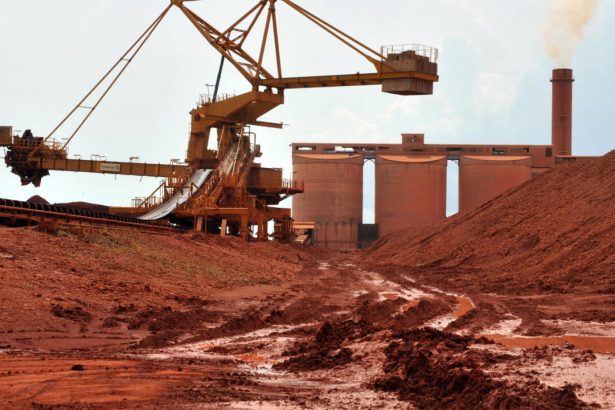
The Government of Guinea and Emirates-based aluminium producer Emirates Global Aluminium (EGA) have reached an amicable settlement aimed at resolving a major dispute surrounding the suspension of operations by Guinea Alumina Corporation (GAC) and the interruption of bauxite supplies to EGA’s global refining network.
The agreement, announced on May 6, 2026, marks a significant turning point in relations between Conakry and one of the country’s most strategic mining investors after months of tensions linked to the withdrawal of GAC’s mining concession in 2025. Negotiated under the supervision of the Strategic Committee for Simandou and facilitated by the acting president of the Paris Bar Association, the settlement also addresses disputes involving the Compagnie des Bauxites de Guinée (CBG).
The accord comes at a critical moment for Guinea’s mining sector as authorities seek to reinforce economic sovereignty while maintaining investor confidence in one of the world’s most important bauxite-producing jurisdictions.
Settlement Includes Asset Transfer and Supply Renewal
Under the terms of the agreement, which remain subject to certain conditions, the Guinean State will provide a lump-sum payment to GAC in exchange for the transfer of the company’s assets to Nimba Mining Company (NMC). NMC is expected to continue developing and operating the Sangarédi bauxite project in the Boké mining corridor.
The settlement also includes the renewal of bauxite supply agreements between CBG and EGA under revised commercial terms described by both parties as mutually beneficial. The arrangement is strategically important for EGA, which relies heavily on Guinean bauxite to feed its alumina refineries in the Gulf region.
Although financial details were not disclosed, the compromise effectively avoids a potentially lengthy and costly international arbitration process while preserving a critical export and supply relationship between Guinea and the Emirati industrial group.
A Dispute Rooted in Resource Nationalism
The dispute began in August 2025 when Guinea’s transitional authorities withdrew GAC’s concession, citing alleged non-compliance with contractual commitments, particularly the failure to advance construction of a local alumina refinery.
The decision sent shockwaves through global aluminium markets and the mining investment community. GAC had invested billions of dollars into its Guinean operations since entering the country, developing one of the largest integrated bauxite export operations in the Boké region, including mining infrastructure and export logistics through the port of Kamsar.
For Conakry, however, the issue extended beyond operational performance. The government has increasingly pushed foreign mining companies to move beyond raw ore exports and invest in downstream processing capacity within Guinea. Authorities argue that the country must capture greater value from its vast mineral resources rather than remaining primarily an exporter of unprocessed bauxite.
This policy direction aligns with the broader Simandou 2040 development vision promoted by the government of General Mamadi Doumbouya, which prioritizes industrialization, infrastructure development and local value addition.
Djiba Diakité, Minister and Chief of Staff at the Presidency, reaffirmed this strategic doctrine following the signing of the agreement, emphasizing Guinea’s commitment to political and economic sovereignty while remaining open to strategic and responsible investment partnerships.
Guinea Balances Sovereignty and Investor Confidence
The EGA-GAC settlement highlights the delicate balancing act currently shaping Guinea’s mining governance model. Since 2022, the authorities have intensified oversight of mining contracts, environmental obligations and industrial commitments across the sector.
Several operators in the Boké bauxite basin have faced warnings, operational suspensions or pressure to accelerate refinery and infrastructure projects. The government’s objective is clear: transform Guinea from a bulk exporter of raw minerals into a regional industrial hub capable of generating higher domestic value creation, employment and fiscal returns.
At the same time, Guinea remains heavily dependent on foreign capital and technical expertise to develop its world-class mineral reserves. Investors continue to closely monitor the stability and predictability of the country’s regulatory environment, especially as Guinea advances major strategic projects such as Simandou.
The amicable resolution with EGA therefore sends an important signal to international markets. Rather than escalating toward arbitration or a prolonged confrontation, both sides opted for negotiation under a structured political and diplomatic framework.
For Gulf investors, particularly those linked to Abu Dhabi and Dubai sovereign interests, maintaining strong relations with Guinea is strategically important. Guinea remains one of the world’s largest suppliers of high-grade bauxite, a critical raw material for global aluminium production and energy transition industries.
Implications for West African Mining Jurisdictions
Industry observers view the agreement as a potentially influential precedent for mining contract renegotiations across West Africa, where governments are increasingly seeking stronger control over strategic resources amid rising global demand for critical minerals.
The settlement demonstrates that resource nationalism and foreign investment do not necessarily have to evolve into open conflict if both governments and investors maintain channels for pragmatic negotiation.
Attention will now turn to the operational implications of the agreement, including the transition of GAC assets to NMC, the future structure of EGA’s supply chain in Guinea, and the possibility of renewed commitments toward domestic alumina refining capacity.
For Guinea’s mining sector, the outcome reinforces a broader message: the country intends to assert greater control over the development of its mineral wealth while continuing to position itself as a long-term destination for strategic mining investment.