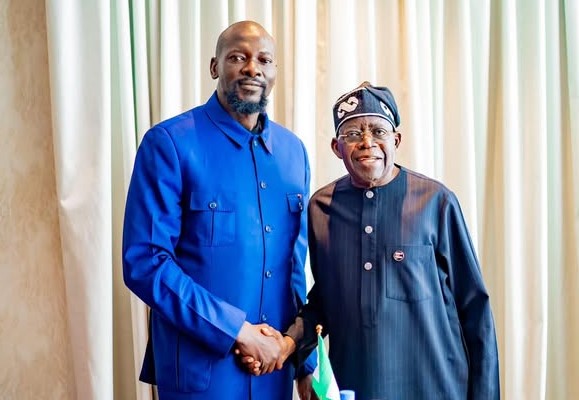
The strengthening diplomatic engagement between Guinea and Nigeria is emerging as more than a political gesture; it reflects growing regional recognition of Guinea as one of Africa’s most strategic mining jurisdictions. Discussions between Bola Ahmed Tinubu and Mamadi Doumbouya during the Africa CEO Forum in Kigali highlighted expanding opportunities for cooperation in minerals, metals, infrastructure, and industrial development.
President Tinubu formally invited Guinea’s leader for a state visit to Nigeria, with both sides exploring partnerships centered on Guinea’s vast mineral endowment. The conversations come as international investors increasingly view Guinea as a long-term destination for mining capital, infrastructure financing, and downstream processing.
Guinea’s attractiveness is rooted first in geology. The country hosts the world’s largest known reserves of bauxite—the critical raw material for aluminium production—alongside globally significant iron ore deposits, including the high-grade Simandou basin, as well as substantial gold and diamond resources. This diversified mineral portfolio positions Guinea as a supplier to industries linked to construction, transportation, energy transition technologies, and manufacturing.
However, geology alone does not explain the growing interest.
From Resource Potential to Industrial Opportunity
Over recent years, Guinea has progressively shifted from being viewed solely as an exporter of raw minerals toward becoming a destination for integrated mining and infrastructure investment. Investors increasingly assess opportunities across the entire value chain: railways, ports, energy systems, alumina refining, steel inputs, and logistics corridors.
The renewed Nigeria–Guinea engagement appears aligned with this trend. Statements surrounding the meetings referenced minerals alongside infrastructure, indicating recognition that mining growth in Guinea depends on transport networks, energy availability, and industrial ecosystems.
This integrated approach mirrors current investment models across Africa, where financiers seek combined exposure to mining operations and enabling infrastructure.
Policy Direction and Strategic Positioning Matter
Another factor enhancing Guinea’s appeal is the government’s stronger emphasis on local value addition and strategic resource management. Authorities have pushed for greater in-country processing, local content participation, and infrastructure commitments from mining companies.
For global investors, such policies can create uncertainty if poorly implemented. Yet when paired with regulatory clarity, they also signal long-term industrial ambition—potentially increasing returns beyond extraction alone.
Guinea additionally benefits from geography. Its Atlantic coastline provides export access to European, North American, and Asian markets, while proximity to regional economies such as Nigeria could support future West African industrial partnerships in metals and manufacturing.
Political Stability Remains the Key Variable
Despite strong fundamentals, Guinea’s investment trajectory will continue to depend heavily on governance, institutional predictability, and completion of the political transition process. Mining investors generally prioritise regulatory stability, contract security, and transparency over resource abundance alone.
The dialogue between Abuja and Conakry may therefore carry broader significance: deeper regional cooperation can strengthen confidence among international financiers assessing long-horizon projects worth billions of dollars.
For Guinea’s mining industry, increasing diplomatic engagement with Africa’s largest economy signals recognition that the country is evolving into more than a resource holder. It is increasingly being viewed as a strategic mining and industrial hub capable of shaping regional supply chains in bauxite, iron ore, and future metals development.
If supported by stable policies and infrastructure delivery, Guinea’s mineral wealth could continue attracting partnerships well beyond traditional mining investors—extending into manufacturing, logistics, energy, and industrial processing sectors.