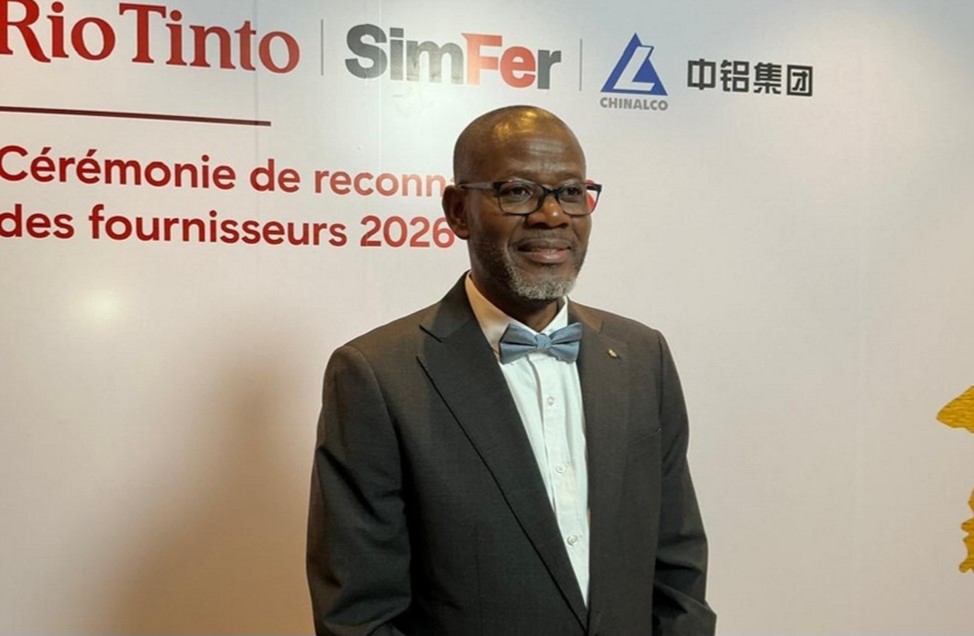
The expansion of local procurement under the Simandou iron ore project continues to accelerate, with nearly US$2 billion in contracts awarded to companies operating in Guinea since early 2025, according to senior leadership at Rio Tinto in Guinea.
The figure was disclosed by Aboubacar Koulibaly during the second edition of Rio Tinto SimFer’s supplier recognition ceremony held in Conakry on 13 May 2026. The event highlighted the performance of suppliers engaged in the development of the world-class Simandou Project, one of the largest undeveloped high-grade iron ore deposits globally.
According to Koulibaly, the growing participation of Guinean enterprises in Simandou’s supply chain reflects tangible progress in local content implementation and capacity building within the country’s mining ecosystem.
“The number of companies nominated and rewarded this year demonstrates increasing engagement and performance among local suppliers,” he indicated, emphasizing that Rio Tinto SimFer continues to expand procurement opportunities for national businesses through the acquisition of goods and services linked to project execution.
The disclosed US$2 billion contracting volume represents a significant milestone for Guinea’s mining-linked private sector. The contracts cover a broad range of services and supplies required for the construction and development phases of Simandou, including logistics, civil works, operational support, engineering services, and other industrial activities associated with large-scale mining infrastructure.
For Guinea, where policymakers have increasingly prioritized local content legislation and domestic value creation, the spending level signals growing integration of national companies into complex mining supply chains traditionally dominated by international contractors.
Koulibaly stressed that beyond contract value, supplier performance in health and safety, environmental stewardship, ethics, and operational standards remains a core criterion for sustained participation in mining projects.
He noted that recognition awards presented during the ceremony aimed to reward suppliers demonstrating strong commitment to responsible mining practices and compliance with international standards.
The supplier recognition initiative forms part of Rio Tinto SimFer’s broader local content strategy designed to strengthen Guinean business competitiveness while supporting long-term socioeconomic benefits from the Simandou development. The approach seeks to encourage excellence, improve contractor capabilities, and foster sustainability across the mining value chain.
As Simandou advances toward production, local procurement performance will remain a key indicator watched closely by regulators, communities, and industry stakeholders. The ability of Guinean enterprises to meet increasingly demanding technical, environmental, and safety requirements may determine how much economic value remains within the country over the project’s lifecycle.
The latest figures suggest that local companies are securing a more substantial role in one of Africa’s most strategic mining developments—potentially reshaping Guinea’s domestic industrial base and creating longer-term opportunities beyond the construction phase of Simandou.