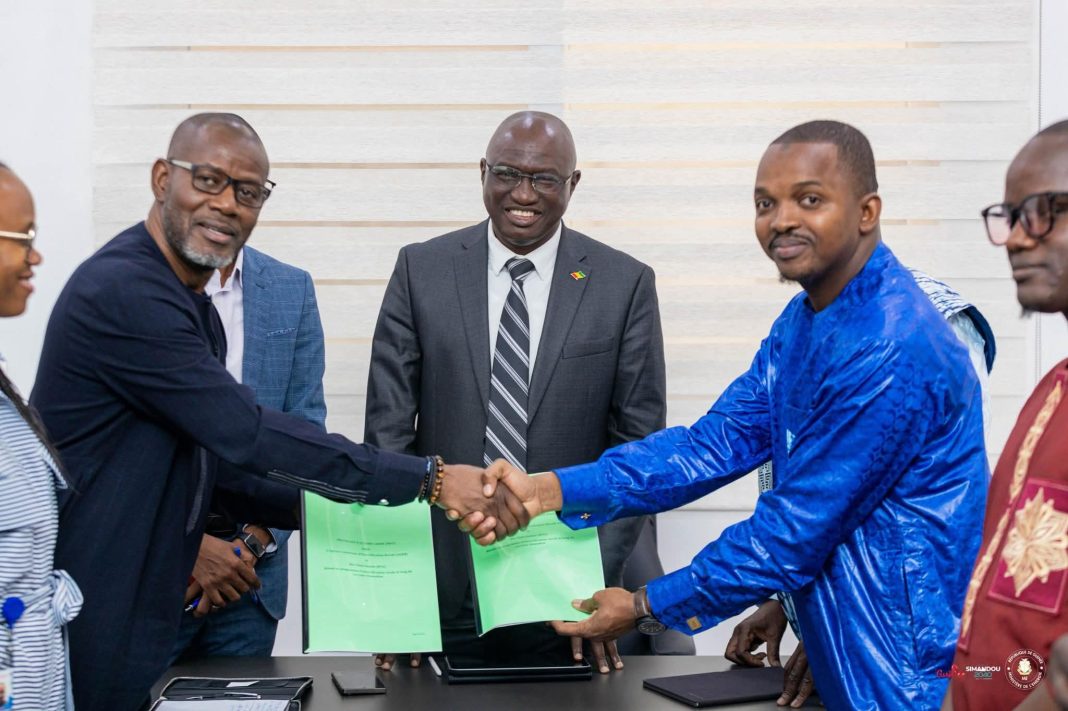
Guinea’s attractiveness as a premier mining investment destination continues to strengthen, as major resource projects increasingly extend beyond extraction into long-term infrastructure and community development. The latest example comes from Rio Tinto Guinée, which signed a Memorandum of Understanding (MoU) on 11 May 2026 with Guinean Rural Electrification Agency (AGER) to support rural electrification initiatives along the Simandou development corridor.
Signed in Conakry in the presence of Guinea’s Minister of Energy, the agreement establishes a formal cooperation framework between Rio Tinto Guinée and AGER, aligning with the country’s rural electrification strategy and broader local development priorities. The partnership aims to improve sustainable access to electricity for rural and peri-urban communities stretching along the Simandou corridor from Beyla to Morebaya.
The initiative reflects a growing trend in Guinea’s mining sector: large-scale resource investments increasingly serving as catalysts for infrastructure expansion, socioeconomic development, and regional transformation.
Under the MoU, both parties will collaborate to identify and prioritize electrification projects that respond to local community needs while remaining aligned with national planning frameworks and environmental and social standards. Although the agreement does not constitute operational or financial commitments at this stage, it signals an intention to integrate long-term community benefits into the Simandou ecosystem.
According to Aboubacar Koulibaly, Managing Director of Rio Tinto Guinée, access to electricity remains a fundamental driver of development and economic opportunity. The company views electrification as an enabler of improved living standards, stronger local economies, and enhanced access to healthcare, education, and security services.
Why Guinea Is Becoming Increasingly Attractive to Mining Investors
Rio Tinto–AGER agreement highlights broader structural factors explaining Guinea’s growing appeal to global mining companies and institutional investors.
1. World-class mineral endowment
Guinea possesses some of the largest untapped mineral reserves globally, including the world’s biggest bauxite reserves and the high-grade iron ore deposits of Simandou—widely considered one of the most significant undeveloped iron ore projects worldwide. The country also hosts substantial gold, diamond, and emerging critical mineral potential.
2. Infrastructure-led mining development
Historically, inadequate infrastructure constrained investment. However, projects such as Simandou are changing this landscape through integrated rail, port, power, and logistics corridors. The development model increasingly creates multi-user infrastructure capable of supporting broader economic growth beyond mining operations.
3. Government emphasis on local value creation
Guinea has demonstrated stronger expectations regarding local content, beneficiation, employment generation, and community development. While these requirements increase obligations for operators, they also contribute to greater long-term project stability and social acceptance.
4. Growing focus on ESG and shared value
International investors are placing increasing weight on environmental, social, and governance (ESG) performance. Partnerships like Rio Tinto–AGER electrification initiative illustrate a shift toward “shared-value mining,” where host communities benefit from infrastructure linked to extractive projects.
5. Strategic timing in global commodity markets
Demand for steel-making inputs, aluminum, and minerals supporting energy transition industries continues to reshape investment flows. Guinea’s resource base positions it favorably within future supply chains.
As the Simandou project advances, associated investments in energy access, transport infrastructure, and regional development may become as transformative as the mine itself. For Guinea, this evolution suggests a transition from being viewed solely as a resource-rich jurisdiction toward becoming an integrated mining and infrastructure growth hub in West Africa.
Rio Tinto–AGER agreement therefore represents more than a rural electrification initiative—it underscores how mining-led development is increasingly defining Guinea’s economic trajectory.