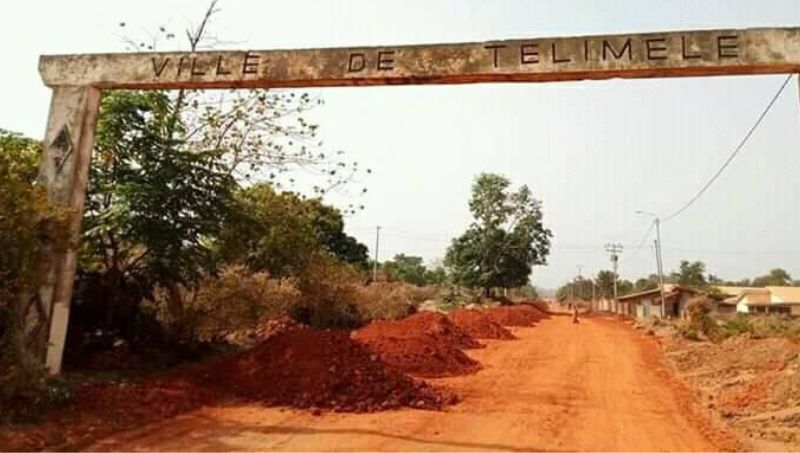
A community organization in Dakakoura, within Télimélé Prefecture, has publicly raised concerns over the environmental and socio-economic impacts linked to expanding mining activities in the region, urging stronger collaboration between mining companies, authorities, and local populations to ensure long-term sustainable development.
The appeal comes ahead of “Donkin Dakakoura 2026,” a local initiative aimed at promoting community engagement and development. Speaking in Conakry on 16 May, Amadou Baïlo Diallo, a member of the Association Fii Bhantal Dakakoura, highlighted growing pressure on local livelihoods despite increased mining presence in the area.
According to the association, mining operations have brought some economic opportunities but are also contributing to mounting challenges, including declining water availability, pressure on agricultural land, road safety concerns, and disruption of traditional livelihoods dependent on farming and livestock.
Dakakoura and surrounding areas in Télimélé have reportedly witnessed the installation of multiple mining company bases in recent years. However, community representatives argue that improvements in access to basic services such as potable water and healthcare have not kept pace with mining expansion.
Diallo pointed to evidence of shrinking water sources and rising tensions over land use, warning that agriculture and pastoral activities — key pillars of rural livelihoods — are increasingly vulnerable. Concerns were also raised regarding the interaction between mining transport routes and public roads, with communities citing heightened accident risks associated with heavy vehicle traffic.
Land compensation remains another sensitive issue. Community members allege that agricultural assets, including banana plantations and acacia farms, have been damaged or lost due to mining-related activities, while compensation mechanisms are perceived as insufficient.
The debate reflects broader challenges facing Guinea’s mining sector, where balancing resource extraction with environmental stewardship, social acceptance, and equitable local development remains a critical issue. Guinea continues to attract significant mining investment, particularly in bauxite and iron ore, increasing pressure on operators to strengthen environmental, social, and governance (ESG) performance and community relations.
Despite expressing grievances, the Association Fii Bhantal Dakakoura emphasized that its objective is not confrontation with mining companies. Instead, it advocates for structured dialogue and partnerships designed to improve benefit-sharing and support sustainable local economic development.
“Our ambition is to establish cooperation between mining companies and communities to encourage fair resource distribution and sustainable development,” Diallo stated, according to local reports.
The association also highlighted its own community initiatives since 2018, including the construction of a health post, installation of six boreholes to improve water access, and provision of vehicles to facilitate transportation between villages and nearby towns.
As part of Donkin 2026 activities, organizers plan vocational training programs for women — including soap-making initiatives — alongside cultural and community events intended to strengthen local participation.
The concerns emerging from Télimélé underscore a recurring challenge for Guinea’s mining industry: ensuring that host communities experience tangible and lasting socio-economic benefits alongside mineral development. For operators, proactive engagement, transparent compensation processes, and investment in local infrastructure may increasingly determine the sustainability of future mining projects and community acceptance.