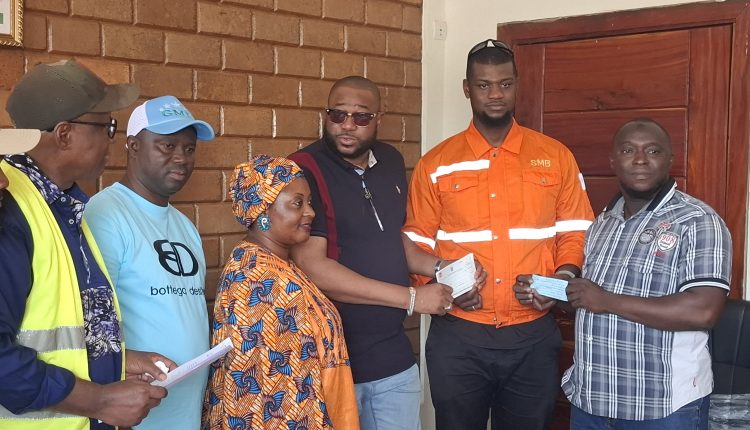
The Société Minière de Boké (SMB) has disbursed more than GNF 1.22 billion in surface taxes to local communities affected by its mining operations in the prefectures of Boké and Télimélé, reinforcing its compliance with Guinea’s Mining Code and its broader community development commitments.
The payment ceremony took place on May 9, 2026, at the offices of the Prefectural Directorate of Mines in Boké, bringing together administrative authorities, municipal revenue officials, representatives from the Ministry of Mines and Geology, and local government officials from the beneficiary municipalities.
The payments were made under Article 160 of Guinea’s Mining Code, which requires mining companies to pay “taxes superficiaires” or surface royalties to local authorities impacted by mining activities. The mechanism is designed to support local development and strengthen the socio-economic contribution of the mining sector to host communities.
For the 2026 fiscal year, SMB allocated a total of GNF 1,223,581,671 across nine local collectivités in the Boké and Télimélé regions, two areas central to Guinea’s bauxite industry.
In Boké Prefecture, the largest allocation went to the rural commune of Dabiss, which received more than GNF 452 million. Other beneficiaries included Kanfarandé with GNF 359 million, Tanènè with GNF 272 million, Boké Urban Commune with GNF 108 million, Kolaboui with GNF 55 million, and Malapouya with GNF 53 million.
In Télimélé Prefecture, the rural commune of Missira received GNF 166 million, followed by Daramagnaki with GNF 94 million and Konsotami with approximately GNF 20 million.
Speaking during the ceremony, Abdoulaye Sampil, SMB’s legal and tax adviser, emphasized that the funds are intended to directly support local development priorities and improve living conditions in mining-affected communities.
According to Sampil, the resources should be used transparently and in line with local development plans, particularly for the construction of schools, water infrastructure, health centers, and other essential public services. He also stressed the importance of maintaining social dialogue and stability to ensure sustainable local development around mining operations.
Representatives of the Ministry of Mines and Geology reiterated that the payment of surface taxes remains a legal obligation for mining companies operating in Guinea. Boubacar Barry, representing the regional mining administration, highlighted the need for constructive cooperation between mining companies and host communities to preserve a stable operating environment for mining projects.
The latest disbursement comes as Guinea continues to push for stronger local economic benefits from its mining sector, particularly in the bauxite-rich Boké corridor where infrastructure pressure, environmental concerns, and community expectations remain high.
Over the past decade, SMB has positioned itself as one of Guinea’s leading bauxite producers and exporters while expanding its social investment programs in operational zones. The company’s continued payment of surface royalties reflects the increasing importance of local content, community engagement, and social responsibility in Guinea’s evolving mining governance framework.
For mining stakeholders, the initiative also underscores the growing role of fiscal decentralization mechanisms in supporting community acceptance and long-term operational stability across Guinea’s mining regions.