


Conakry, Guinea - Republic of Guinea has taken another decisive step in its drive to capture greater value from its mineral wealth, with President Mamadi Doumbouya announcing a new policy direction that will phase out the export of raw gold and prioritize domestic refining. The move signals an important evolution in the country's mining strategy and aligns with broader efforts to transform Guinea from a supplier of raw minerals into a regional industrial powerhouse.
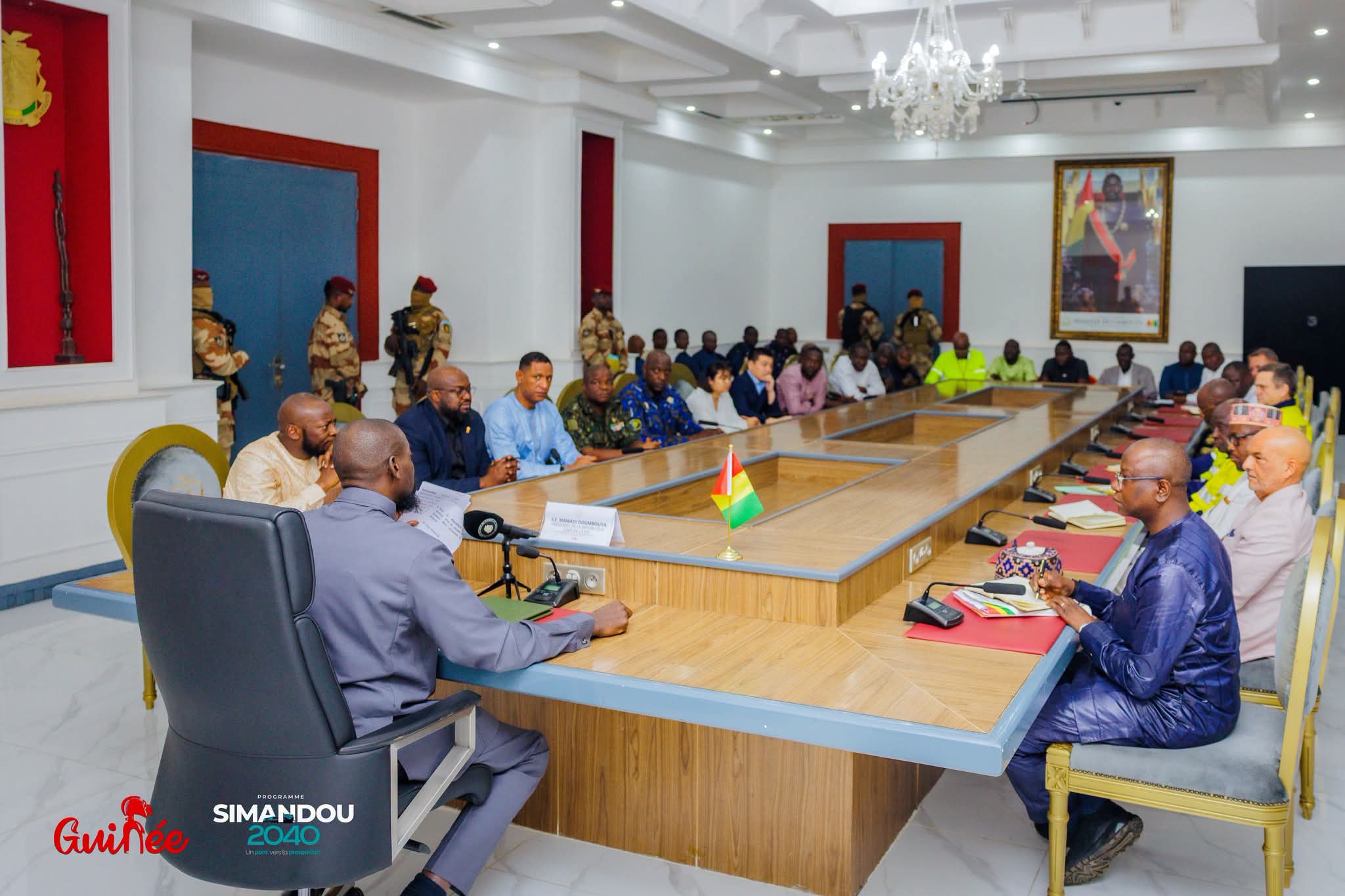
During a strategic meeting held on 19 June 2026, the President gathered representatives from industrial, semi-industrial and artisanal gold mining operations, as well as gold trading houses, to deliver a clear message: Guinea's future lies in local mineral transformation rather than the export of unprocessed resources.
Extending the Beneficiation Agenda Beyond Bauxite
The announcement follows a series of reforms that have already reshaped Guinea's bauxite sector. Over the past several years, the government has intensified its push for in-country processing, requiring mining companies to invest in downstream infrastructure and value-added industries.
The construction of three alumina refineries currently underway across the country has become a symbol of this industrialization agenda. The new gold refining strategy suggests that the government's beneficiation policy is now expanding beyond bauxite to encompass other strategic minerals.
For Guinea, one of Africa's leading gold producers, the implications are significant. Historically, much of the country's gold has been exported with limited domestic processing, meaning substantial value creation occurred outside national borders. By introducing local refining requirements, authorities aim to retain a larger share of the economic benefits generated by the gold industry.
Nimba Gold Refinery at the Center of the Strategy
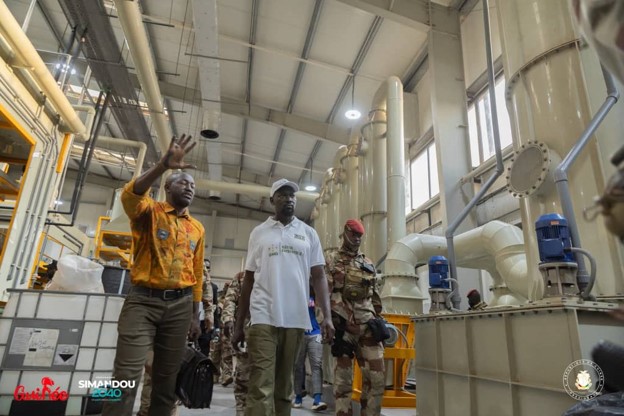
The government's vision is expected to be anchored by Nimba Gold Refinery, located in Gbessia, Conakry.
According to information presented during the meeting, the refinery has a processing capacity of 2,000 kilograms of gold per day, with expansion potential to 4,000 kilograms daily under continuous operations. The facility has been designed to meet international refining standards and includes advanced automation, digital traceability systems, precious metal recovery technologies, and real-time environmental and quality monitoring capabilities.
Beyond refining doré gold, the facility is reportedly capable of processing electronic waste and industrial materials containing valuable metals, potentially opening new opportunities for resource recovery and circular economy initiatives.
If operated efficiently and supplied with sufficient feedstock, the refinery could become one of the most important downstream mining assets in West Africa.
A Strategic Opportunity for Economic Transformation
For Guinea, local refining offers several potential advantages.
First, it creates opportunities to increase value addition within the country. Refining activities generate additional economic output compared with the simple export of semi-processed or unprocessed gold.
Second, a domestic refining industry can strengthen fiscal revenues through improved transparency, traceability and oversight of gold flows. This is particularly important in a sector where informal production and cross-border trading have historically limited governments' ability to fully capture tax revenues.
Third, the development of refining operations creates demand for skilled labour, laboratories, engineering services, logistics providers, equipment maintenance specialists and other supporting industries. This contributes to the emergence of a broader mining services ecosystem.
Finally, refined gold production can strengthen national reserves and enhance Guinea's position in international precious metals markets.
Challenges Will Determine Success
While the policy direction is ambitious, successful implementation will depend on several factors.
The first challenge will be ensuring sufficient refining feedstock. Guinea's industrial mines, semi-industrial operators and artisanal producers will need to participate in formal supply channels capable of feeding local refining facilities consistently.
The second challenge concerns regulatory certainty. Mining investors will closely monitor how the new requirements are implemented, including export controls, refining obligations, pricing mechanisms and compliance procedures.
Infrastructure and energy reliability will also remain critical. Gold refining is a sophisticated industrial activity requiring stable power supplies, technical expertise and internationally recognized quality standards.
In addition, authorities will need to ensure that local refining remains commercially competitive compared with established international refining centers. Efficient logistics, transparent governance and internationally accredited refining processes will be essential to attract confidence from miners, traders and financial institutions.
Simandou 2040 and the Industrialization Vision
The new gold refining policy fits squarely within the government's broader Simandou 2040 vision, which seeks to leverage Guinea's vast mineral resources as a foundation for industrial development.
For decades, Guinea's mining sector has generated substantial export revenues while much of the downstream value chain remained abroad. The current administration is seeking to reverse that pattern by encouraging processing industries that create jobs, build technical capabilities and stimulate wider economic diversification.
The announcement regarding gold refining therefore represents more than a sector-specific reform. It reflects a broader policy philosophy centered on resource beneficiation, industrialization and economic sovereignty.
For mining companies operating in Guinea, the message is increasingly clear: future investment strategies will need to incorporate local value creation as a core component of project development. As the country advances its refinery, alumina and infrastructure ambitions, Guinea is positioning itself not merely as a mining jurisdiction, but as an emerging mineral processing hub in West Africa.
Whether the initiative achieves its full potential will depend on execution, investor collaboration and regulatory stability. However, the direction is unmistakable: Guinea is entering a new phase in which the transformation of mineral resources at home is becoming a central pillar of national development strategy.
Share on social media

-