


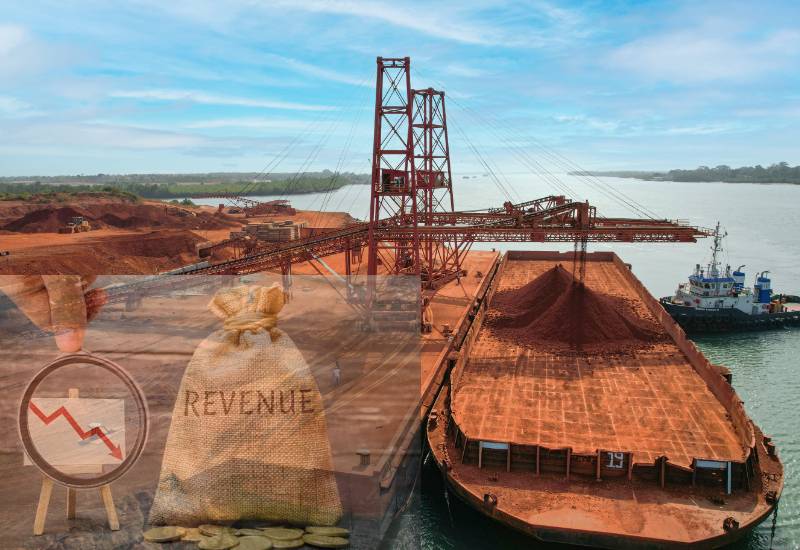
Guinea’s bauxite sector is facing a fiscal paradox: record-breaking mining activity has not translated into higher government revenues from exports. Despite exporting approximately 184 million tonnes of bauxite in 2025, making it the world’s largest producer and exporter, the country has recorded a decline of more than GNF 1,440 billion in export tax revenues.
According to Mohamed Nabé, President of the National Assembly’s Mining Commission, the decline is primarily attributable to falling international bauxite prices and the government’s introduction of export quotas aimed at supporting commodity prices.
The distinction between extraction and export taxation is central to understanding the situation. While revenues from extraction taxes increased by GNF 563 billion, indicating continued growth in mining activity, export tax receipts fell sharply. The divergence reflects a policy shift designed to control supply rather than production.
With Guinea’s bauxite prices determined largely through negotiations between producers and buyers, rather than a dedicated international exchange benchmark, increased supply has placed downward pressure on market prices. The government has therefore introduced export quotas, encouraging mining companies to continue extracting ore while stockpiling part of their production until market conditions improve. Export volumes are reportedly being adjusted towards approximately 150 million tonnes.
A supply-management strategy with operational implications
The quota mechanism represents an attempt to strengthen Guinea’s bargaining position in the international aluminium value chain. By restricting export volumes, authorities hope to reduce market oversupply, support prices and improve the country's long-term resource revenues.
However, the strategy presents operational and commercial challenges for mining companies. Stockpiling increases working-capital requirements, creates additional storage and handling costs, and potentially disrupts production and shipping schedules. Companies may also face pressure on cash flow if extraction continues while export authorisations are constrained.
The policy's effectiveness will depend on whether reduced Guinean supply can materially influence international prices, particularly given China's dominant position as the principal destination for Guinean bauxite. Market conditions in China, including alumina refinery demand and inventory levels, will remain critical determinants of pricing.
Beyond export quotas: securing greater value
Guinea's longer-term challenge is to move beyond volume-driven growth towards stronger price discovery and greater domestic value addition. The proposed Guinea Bauxite Index (GBX), intended to establish a national pricing reference, could improve price transparency and strengthen negotiations with international buyers.
Nevertheless, export restrictions alone cannot guarantee higher revenues. Sustainable gains will require coordinated production planning, transparent pricing mechanisms, reliable logistics and accelerated investment in domestic alumina refining.
For mining investors, the current developments signal a changing regulatory and commercial environment in which export access, pricing arrangements and inventory management will become increasingly important to project economics.
Guinea's objective is clear: to ensure that its position as the world's leading bauxite supplier delivers greater economic value, rather than simply higher export volumes.
Share on social media

-