
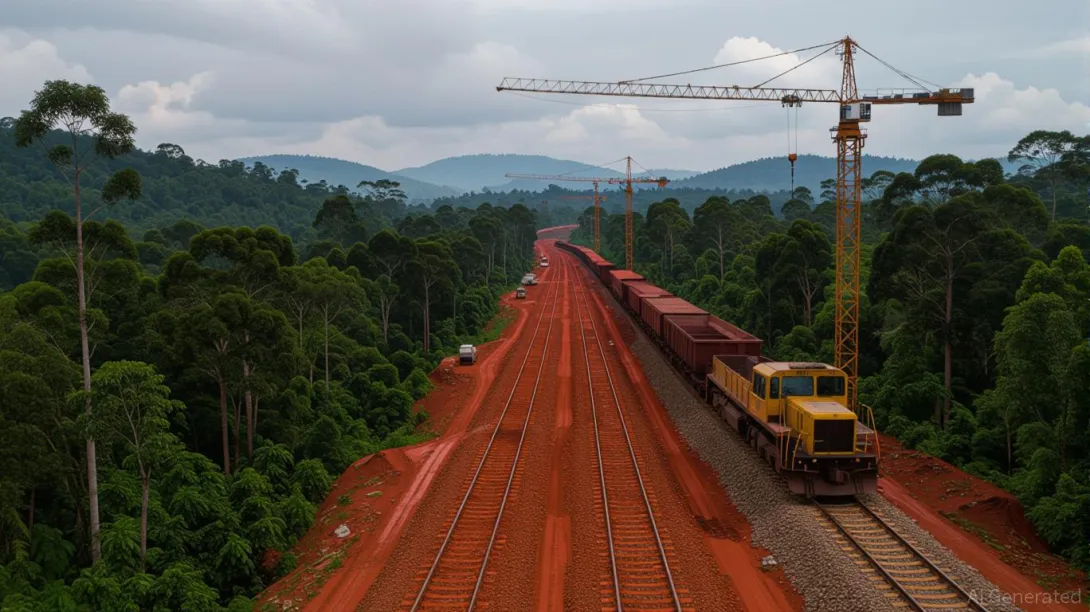
Buried deep in the mountains of southeastern Guinea lies the Simandou range, home to the world’s largest untapped deposit of high-grade iron ore. Long viewed as a “sleeping giant,” Simandou is now awakening, poised to reshape both Guinea’s economy and the global iron ore market. Once fully operational, the project is expected to make Guinea one of the top iron ore exporters in the world and transform West Africa into a new hub for steelmaking raw materials.
A Game-Changing Resource
Simandou’s reserves are estimated at over 2 billion metric tons of ore with an iron content of more than 65% Fe, making it among the purest in the world. The deposit stretches across a 110-kilometer mountain range divided into four blocks—Blocks 1 and 2, developed by the Winning Consortium Simandou (WCS), and Blocks 3 and 4, operated by Rio Tinto in partnership with China Baowu Steel Group and the Guinean government.
This collaboration between international mining leaders and Guinea’s state is intended to unlock a project of unparalleled scale, projected to produce up to 120 million tons of iron ore annually once production ramps up.
Massive Infrastructure for a Massive Mine
At the heart of Simandou’s development lies one of Africa’s most ambitious infrastructure undertakings: the construction of a 650-kilometer railway linking the mines in Beyla and Nzérékoré to a new deep-water port at Matakong, near the Atlantic coast. The railway, designed for heavy-haul transport, will also serve as a multi-user corridor, potentially supporting other mining and agricultural activities across southern Guinea.
The port and railway will not only enable iron ore exports but also open a critical trade artery, integrating remote regions into national and regional markets. Construction is already creating thousands of jobs and driving demand for local services, logistics, and energy.
Economic Catalyst for Guinea
Simandou represents a turning point in Guinea’s development ambitions. The government expects the project to generate billions in revenue, diversify exports beyond bauxite, and spur industrialization. The establishment of local processing facilities and training programs is part of a broader vision to ensure that Guineans benefit directly from the resource boom.
In parallel, authorities are emphasizing transparency and environmental safeguards, learning from past experiences in the bauxite sector. Responsible land use, biodiversity protection, and fair compensation for affected communities are now key components of the national mining strategy.
A New Chapter for Africa’s Mining Industry
Globally, Simandou could alter iron ore trade dynamics by introducing a new major supplier outside the traditional giants—Australia and Brazil. The project’s high-grade ore aligns with the steel industry’s shift toward low-carbon production, as purer ore requires less energy to process.
Once operational, Simandou will not only position Guinea as a global mining powerhouse but also demonstrate Africa’s capacity to deliver world-class, large-scale mining projects.
The mountain that slept for decades is finally stirring—and with it, Guinea’s promise of becoming a cornerstone of the global green industrial future.