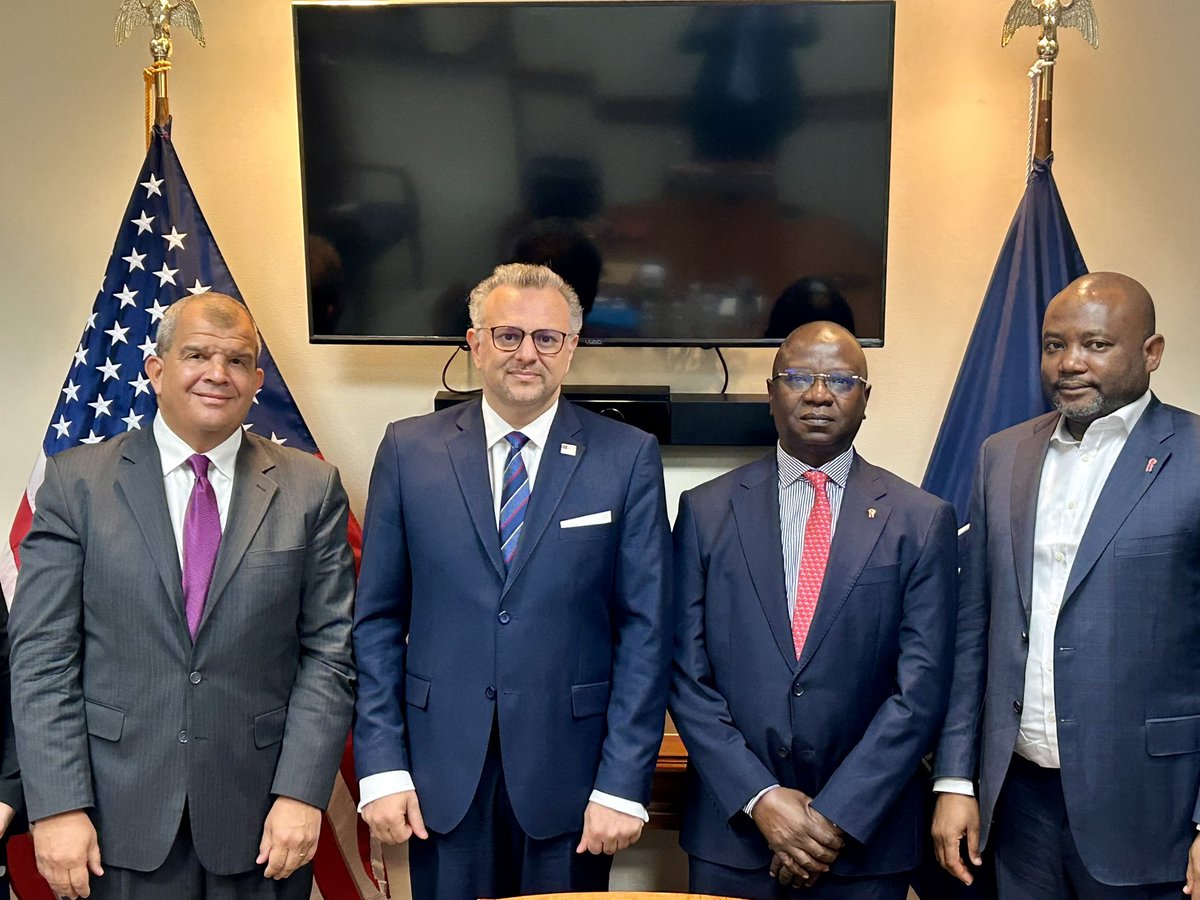
Guinea is stepping up efforts to position itself as a key supplier of critical minerals to the United States and other major industrial economies, following a ministerial engagement in Washington and the signing of a bilateral cooperation agreement with the U.S. government.
Speaking after participating in the first high-level ministerial meeting on critical minerals—where Guinea was among six African countries invited—Minister of Mines and Geology Bouna Sylla outlined the country’s ambition to attract international investment and accelerate resource development. Central to this strategy is intensifying geological research to better identify and quantify critical mineral resources across Guinea’s underexplored terrain.
The agreement with the United States aims to support upstream exploration while promoting downstream value addition. Authorities are seeking to shift away from a purely extractive model toward in-country processing, with the objective of exporting semi-finished and finished mineral products. This approach aligns with Guinea’s broader industrialization agenda under the Simandou 2040 program, which places resource transformation at the core of economic development.
Guinea’s geographic positioning along the Atlantic Ocean is being highlighted as a competitive advantage in accessing transatlantic markets. With proximity to major U.S. and European economic hubs, the government sees logistics as a key enabler in building reliable supply chains for critical minerals—commodities that are increasingly strategic for energy transition technologies, defense systems, and advanced manufacturing.
Beyond geology and logistics, Conakry is also emphasizing regulatory reforms aimed at de-risking investment. Recent measures include improvements in mining cadastre management, enhanced transparency in sector governance, and broader economic reforms designed to ensure legal stability. These initiatives are intended to reassure international investors, particularly U.S. companies, of Guinea’s commitment to a predictable and competitive investment climate.
The push for stronger bilateral cooperation has been reinforced by ongoing diplomatic engagement. A senior U.S. advisor previously highlighted efforts to connect American companies with emerging opportunities in Guinea’s mining sector, underscoring growing interest in diversifying supply sources for critical minerals.
While Guinea is globally recognized for its vast bauxite reserves, the current policy direction signals a strategic pivot toward unlocking other high-value mineral resources. If successfully implemented, this could significantly expand the country’s role in global supply chains while increasing domestic value capture.
For mining stakeholders, Guinea’s evolving critical minerals strategy presents a dual opportunity: early entry into a frontier exploration space and participation in the development of integrated mining and processing hubs. The success of this ambition will, however, depend on the pace of regulatory execution, infrastructure delivery, and the ability to translate policy commitments into bankable projects.