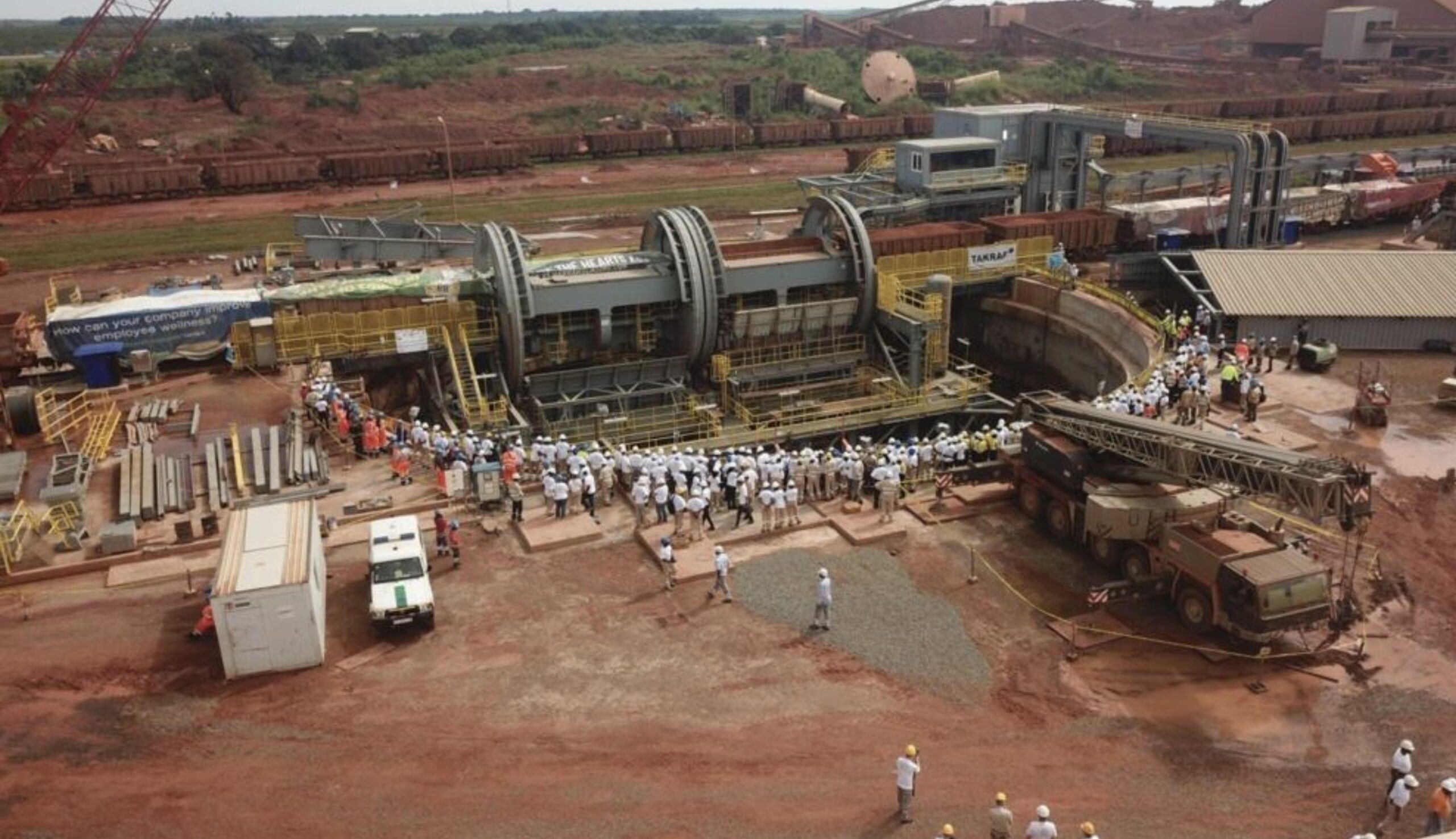
In a significant development for Guinea’s mining industry, DTP Mining, a subsidiary of the French construction giant Bouygues, has announced its withdrawal from the Tinguilinta bauxite mine in the Boké region. The company had been operating as a subcontractor for Guinea Alumina Corporation (GAC), which itself recently lost its mining license following disagreements with the Guinean authorities.
According to reports from Africa Intelligence relayed by RFI, DTP Mining’s exit comes amid the Guinean government’s broader efforts to reassert control over its strategic mining assets. While some sources have linked the decision to external controversies, economic considerations appear to be the primary driver. The loss of GAC’s operating rights in August effectively disrupted DTP’s contractual framework, leaving the company with limited commercial prospects in the project.
In response to GAC’s departure, the Guinean government has established Nimba Mining, a new, fully state-owned mining enterprise, to take over operations at Tinguilinta. This move reflects the authorities’ intent to ensure continuity in production while reinforcing national ownership of key mineral projects.
However, industry observers are closely monitoring the situation, warning that the chain of events could influence investor sentiment. The withdrawal of a major international contractor such as DTP Mining may raise concerns among foreign investors about the predictability of Guinea’s regulatory environment. As RFI noted, investors could perceive recent government decisions as signs of potential instability in the legal and operational frameworks governing mining activities.
For mining companies active or seeking entry into Guinea, this episode underscores the importance of regulatory due diligence and stakeholder engagement. The Guinean government has repeatedly emphasized its commitment to value retention, local content, and stronger state participation in mining ventures. Aligning with these priorities—through local partnerships, transparent operations, and social investment—will be crucial for long-term stability and acceptance.
Despite the uncertainties, Guinea remains one of the world’s most resource-rich jurisdictions, particularly in bauxite and iron ore. The state’s move to create Nimba Mining could mark a new phase of national consolidation aimed at maximizing benefits from resource exploitation. For international operators, this evolving environment demands adaptive strategies that balance commercial interests with the government’s vision of greater sovereignty and accountability in the mining sector.