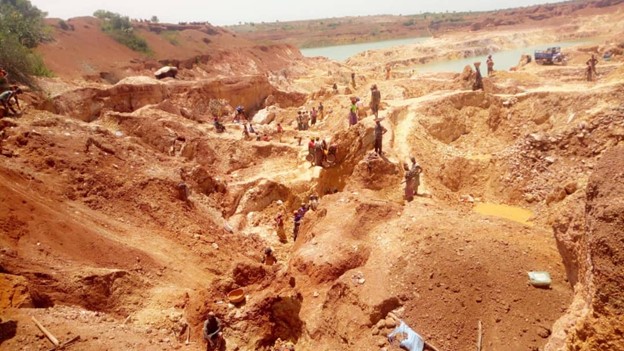
A fatal pit collapse at the artisanal gold mining site of Djökola, located in Kanté-Doubalandou, Dialakoro sub-prefecture, Mandiana, claimed the lives of five women on Monday, March 9, 2026. The victims — four married women and a young girl — were engaged in ore washing and mineral processing activities when the walls of an operational shaft abruptly gave way, burying them beneath the rubble.
The incident occurred at approximately 13:00 local time. Community members and youth from neighbouring localities, including Balandougouba, mobilised spontaneously to conduct rescue operations. Recovery efforts lasted several hours, with the final bodies retrieved between 17:00 and 20:00. Remains were subsequently transferred to a local health facility before being released to families for burial.
A Pattern of Recurring Tragedy
This latest incident follows a near-identical collapse less than 20 days prior at Kondianakoura, also within Mandiana Prefecture, where ten women perished under comparable circumstances. The two events bring the confirmed artisanal mining fatality count in the prefecture to fifteen within a single month — a figure that demands immediate sector-wide attention.
Mandiana is one of Haute-Guinée's principal artisanal gold-producing zones, where orpaillage remains the primary livelihood for a significant share of the population. The disproportionate presence of women in ore processing and washing roles places them at elevated exposure to shaft-side hazards — a structural vulnerability that these tragedies have now laid bare twice in rapid succession.
Structural Deficiencies at the Root
Eyewitness accounts and field observations consistently describe sites operating without adequate geotechnical supervision, engineered shaft reinforcement, or personal protective equipment. In the absence of shoring structures or stability monitoring, shallow alluvial shafts remain acutely susceptible to sudden sidewall failure, particularly following seasonal ground saturation.
The Imperative for Regulatory Intervention
Guinea's regulatory framework for artisanal and small-scale mining (ASM), administered under the Ministry of Mines and Geology, mandates basic safety standards for licensed orpaillage operations. However, enforcement in remote interior prefectures such as Mandiana remains demonstrably inconsistent. The recurrence of mass-casualty collapses within the same prefecture and within the same month constitutes a systemic failure requiring escalated governmental response.
Industry stakeholders, civil society organisations, and local authorities must collectively accelerate the deployment of community-based safety training, site inspection protocols, and formalization incentives — before the next collapse occurs.