The Republic of Guinea is entering a new industrial era as the government advances plans to move from raw mineral exports toward large-scale local processing. The Ministry of Mines and Geology, under Minister Bouna Sylla, has outlined an ambitious roadmap to establish between five and six alumina refineries by 2030, signaling a strategic shift that could redefine the country’s role in the global aluminum value chain.
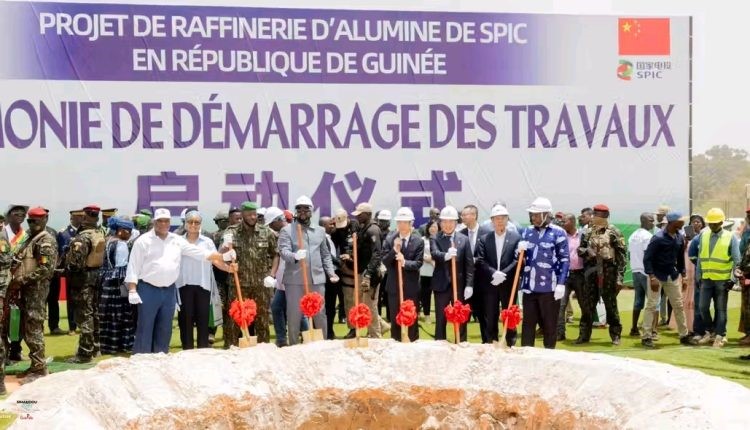
Guinea, the world’s largest bauxite producer, has long supplied unprocessed ore to refineries in China, Europe, and the Middle East. However, with rising global demand for refined alumina and a growing emphasis on value addition within producing countries, Conakry is determined to industrialize its mining sector. According to Reuters, the country recently reached a major milestone with the signing of its first alumina refinery agreement, led by China’s state-owned power company SPIC. Construction of the facility is already underway and is expected to be completed by the end of 2027.
Minister Sylla emphasized the historical significance of this development, noting that “no alumina refinery has been built in Guinea since the colonial era—this will change.” The SPIC project marks the first tangible step in Guinea’s broader industrialization agenda, which also involves advanced discussions with Chinalco and France’s Alteo, as well as ongoing negotiations with the Compagnie des Bauxites de Guinée (CBG) and U.S. major Alcoa.
If all planned projects reach completion, Guinea’s alumina refining capacity could rise to about seven million tonnes per year by 2030. This transformation would not only enhance the country’s industrial base but also create thousands of local jobs and stimulate downstream sectors such as logistics, power, and port infrastructure.
The strategic timing is notable. Guinean bauxite is recognized for its low silica content and suitability for low-temperature refining, making it a highly attractive feedstock for global alumina producers. Local refining would therefore capitalize on a clear technical and economic advantage while reducing the export of unprocessed ore.
Parallel to these developments, progress is also being made in Guinea’s iron ore sector. The Simfer joint venture, led by Rio Tinto and overseeing one half of the Simandou iron project, has agreed to conduct a feasibility study for a pelletizing plant. The study will assess the economic and technical viability of establishing an iron pellet facility to process high-grade Simandou ore domestically. The government has made it clear that failure to meet the study commitments will trigger intervention by an international engineering firm, at the expense of the Transguinean Company.
While these initiatives represent major progress toward domestic value addition, industry analysts caution that Guinea’s dependency on foreign partners may persist. According to Allison Ju of Shanghai Metals Market (SMM), “Chinese alumina projects in Guinea will not fundamentally reduce dependency; exports will simply shift from bauxite to alumina.”
For mining investors and operators, Guinea’s refining drive offers both opportunity and complexity. On one hand, the policy environment strongly favors local transformation, creating new openings for infrastructure, power, and engineering partnerships. On the other, success will depend on building local capacity, ensuring stable energy supply, and structuring agreements that balance state priorities with investor returns.
As Guinea advances toward its 2030 vision, mining companies should anticipate a regulatory and commercial landscape increasingly focused on in-country beneficiation — a trend reshaping the future of West Africa’s mining industry.