Guinea-Conakry, long synonymous with bauxite dominance, is now taking strategic steps to diversify its extractive sector by emerging as a serious contender in West Africa’s oil and gas landscape. With nearly 100 million tons of bauxite exported in the first half of 2025, the country is now channeling its geological and institutional strengths toward unlocking its hydrocarbon potential within the MSGBC Basin — a rapidly rising frontier that includes Mauritania, Senegal, The Gambia, and Guinea-Bissau.
Regional developments have already underscored the MSGBC Basin’s promise: Senegal achieved first oil from Woodside’s Sangomar field in 2024, while the bp-Kosmos Greater Tortue Ahmeyim LNG project began gas production the same year. Building on this momentum, Guinea-Conakry is advancing its regulatory reforms, expanding its seismic data coverage, and intensifying investor engagement to attract upstream exploration.
Geological Promise and Exploration Readiness
Geologically, Guinea-Conakry shares characteristics with the Atlantic Equatorial Margin, home to prolific discoveries in Guyana and Suriname — where over 10 billion barrels of recoverable oil have been found. Its Cretaceous formations, source rocks, and structural traps mirror those that unlocked commercial success across the Atlantic. To date, Guinea has compiled over 17,000 km² of seismic data and historical borehole records, providing a strong technical foundation for exploration campaigns.
Early exploration wells, including GU-2B-1 and Sabu-1, have confirmed the presence of mature source rocks and quality reservoirs, validating a working petroleum system. Although earlier deepwater drilling at Fatala-1 yielded no commercial flow, the structural and stratigraphic analogies with proven petroleum provinces continue to sustain optimism.
SONAP: Driving the Upstream Vision
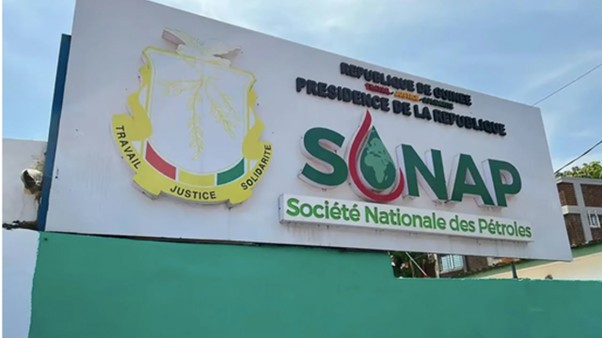
Central to this progress is the Société Nationale des Pétroles de Guinée (SONAP), established in 2021. Under the leadership of Director General Dr. Lanciné Condé, SONAP has invested in advanced field technologies and built the country’s first seismic data visualization center in partnership with SLB and TGS. The center currently houses 45,000 km² of 2D and 15,000 km² of 3D seismic data, offering investors direct access to high-resolution subsurface insights.
Creating an Investor-Friendly Framework
SONAP’s recent initiatives are reshaping Guinea’s investment climate. The establishment of a national petroleum cadastre and the delineation of 22 prospective offshore and onshore blocks set the stage for an upcoming licensing round. Additionally, tenders launched in April 2025 — including one for a national storage platform and another for ISO 9001 and 45001 certifications — reflect the state’s commitment to transparency, safety, and operational excellence.
For investors, Guinea-Conakry presents an early-entry advantage: reduced exploration risk through robust seismic data, competitive terms, and a proactive national operator. The upcoming MSGBC Oil, Gas & Power 2025 Conference in Dakar (December 9–10) will be a pivotal platform for engagement, where SONAP is expected to showcase available acreage and outline partnership opportunities in this promising frontier.
Guinea-Conakry’s emergence as a hydrocarbon player signals a new phase of diversification for its resource sector — and a compelling opportunity for exploration companies seeking the next growth basin in West Africa.