


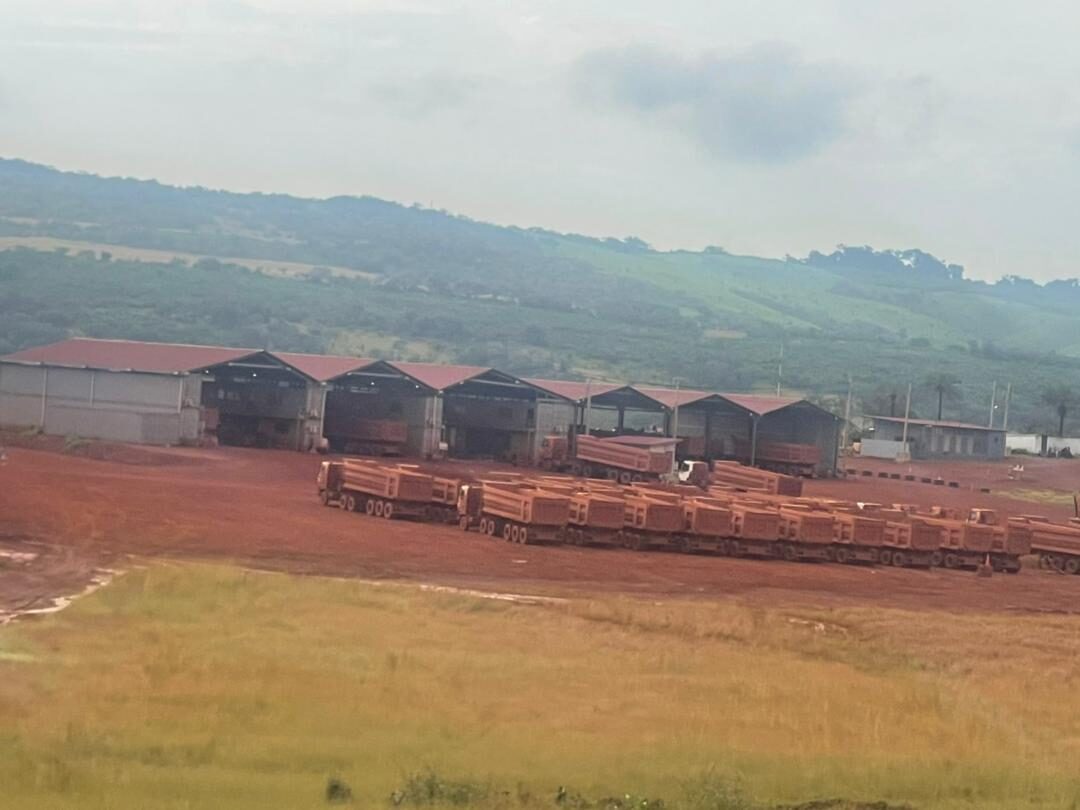
On Friday morning, mining operations at The Mining House site in Missira came to a halt after local communities, in solidarity with mine workers, blocked access to facilities and disrupted truck movements. The action was a direct protest against the company’s alleged non-compliance with the new Collective Agreement for Mines and Quarries, which officially came into force in August 2025.
Community members arrived early to shut down workshops and prevent vehicles from entering the mining concession. “It was the community that came early to close the workshop. We stand in solidarity, and the company must respect its commitments,” said one protester, who wished to remain anonymous. The company responded by evacuating all personnel as a safety measure, with staff instructed to remain at home until further notice.
A representative from the Human Resources department at The Mining House acknowledged the company’s obligation to abide by Guinean law but declined to provide details on the next steps. “We cannot avoid Guinean law,” the manager stated, suggesting that internal discussions were ongoing but offering no clear plan to address the grievances.
This latest incident in Missira adds to a growing list of industrial tensions within Guinea’s mining sector. Earlier this year, workers at Kaboye also suspended operations over similar concerns about the application of the same collective agreement, signaling a wider pattern of discontent across the industry.
Broader Implications for Guinea’s Mining Industry
The Missira blockade underscores a significant challenge for mining companies operating in Guinea: the need to ensure full compliance with evolving labor regulations and to strengthen social dialogue with workers and host communities. The 2025 Collective Agreement for Mines and Quarries introduced new standards on wages, benefits, safety, and working conditions—measures designed to align the sector with international best practices. However, its implementation appears to be uneven, and this inconsistency has become a flashpoint for unrest.
For mining companies, the financial and operational impacts of such community-led blockades can be substantial. Production disruptions not only affect short-term output but can also delay exports, affect contractual obligations with partners, and undermine investor confidence. In an industry where logistics and scheduling are tightly integrated, even a few days of downtime can translate into significant economic losses.
Moreover, the growing assertiveness of local communities in defending workers’ rights reflects a changing social landscape in Guinea’s mining regions. Communities are increasingly aware of legal frameworks and collective agreements, and they are using this awareness to demand accountability. This dynamic reinforces the need for companies to adopt proactive community engagement strategies that go beyond compliance, emphasizing transparency, consultation, and shared value creation.
A Call for Constructive Dialogue
Company sources have indicated that The Mining House’s management is open to negotiations aimed at resolving the dispute. Discussions are expected to center on the concrete implementation of the collective agreement and the harmonization of its provisions with existing company policies. A swift and transparent resolution will be critical not only for the company’s operational continuity but also for maintaining social stability in the Missira region.
Industry observers note that similar disputes, if left unresolved, could deter future investments in Guinea’s mining sector. International investors are increasingly sensitive to environmental, social, and governance (ESG) performance indicators, and recurring labor or community conflicts can significantly affect the perception of operational risk.
The Missira incident therefore serves as a timely reminder for all mining operators in Guinea to strengthen compliance mechanisms, foster open communication with stakeholders, and prioritize social responsibility alongside production targets. Sustainable mining in Guinea will depend as much on respect for labor and community rights as on the country’s rich mineral endowment.
A rapid, fair resolution in Missira could set an important precedent—demonstrating that constructive dialogue between companies, workers, and communities remains the most effective path toward stability and shared progress in Guinea’s mining sector.
Share on social media

-