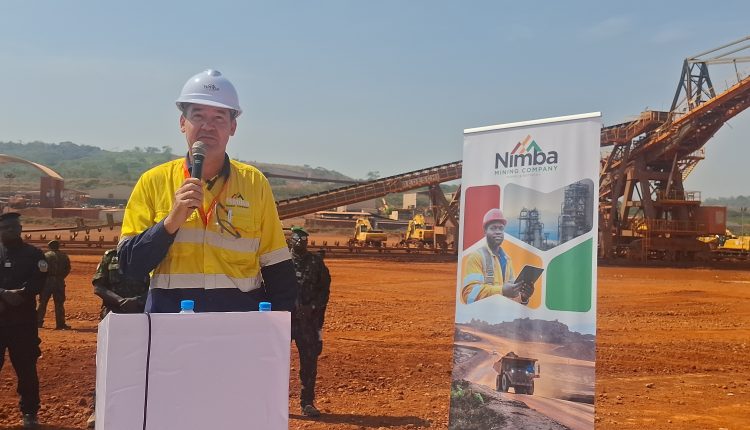
Nimba Mining Company S.A. (NMC) has officially launched commercial operations at its Tinguilinta bauxite mine in the Tanéné sub-prefecture, Boké region, marking a significant milestone for Guinea's domestically-owned mining sector.
The operational commissioning ceremony, held on December 20, 2025, was attended by senior management and stakeholders, signaling the resumption of bauxite production and the commencement of rail-based export operations. This development strengthens Guinea's mining logistics infrastructure and represents a strategic advancement in the country's bauxite value chain.
NMC has introduced surface mining technology to the Tinguilinta concession, representing the first deployment of this extraction methodology on this particular mining permit. The surface miner technology offers enhanced operational efficiency and potentially reduced environmental impact compared to conventional extraction methods—a critical consideration given Guinea's increasingly stringent environmental regulatory framework.
According to Patrice L'Huillier, NMC's Director General, operations commenced with a zero-accident safety record, aligning with international mining safety standards. The company has integrated rail transportation into its logistics strategy, utilizing existing infrastructure to optimize export capabilities from the Boké region, already recognized as Guinea's primary bauxite-producing area.
NMC has established ambitious production targets for 2026, aiming to extract 10 million tonnes of bauxite annually. This production volume would position the company as a notable mid-tier producer within Guinea's competitive bauxite sector, which currently accounts for approximately one-third of global bauxite supply.
The operation is projected to generate substantial employment opportunities, with management indicating plans for "thousands of direct and indirect jobs." Such employment generation is particularly significant given the socio-economic development imperatives in the Boké region, where mining operations must balance commercial objectives with community development obligations.
Perhaps most significantly, NMC has announced plans to conduct feasibility studies for an alumina refinery—a flagship project that would represent vertical integration within Guinea's bauxite sector. This initiative aligns with the Guinean government's longstanding policy objective of developing domestic beneficiation capacity rather than exporting raw bauxite exclusively.
The transition from bauxite extraction to alumina refining represents substantial capital investment and technical complexity, requiring considerations of power supply, water resources, and skilled workforce development. If realized, such a facility would capture additional value within Guinea and contribute to the government's economic diversification strategy under the military transition government led by Colonel Mamadi Doumbouya.
NMC positions itself as a 100% Guinean-owned enterprise, benefiting from governmental support for domestic mining companies. This ownership structure may provide strategic advantages in permit negotiations and community relations, though it also presents capital mobilization challenges typical of locally-owned operations in capital-intensive sectors.
The company's emphasis on sustainable development, environmental stewardship, and zero-accident operations suggests alignment with international ESG standards—increasingly important for securing offtake agreements with aluminum producers facing sustainability pressures from end-users.
The operational launch at Tinguilinta occurs within a dynamic market context, with bauxite demand closely tied to aluminum production trends in China and other major consuming markets. NMC's rail-based export strategy via Boké positions the company competitively for seaborne shipments to international customers.
The inclusion of traditional ceremonies emphasizing social cohesion with affected communities indicates NMC's recognition of social license imperatives—a critical success factor for mining operations in Guinea's complex socio-political environment.