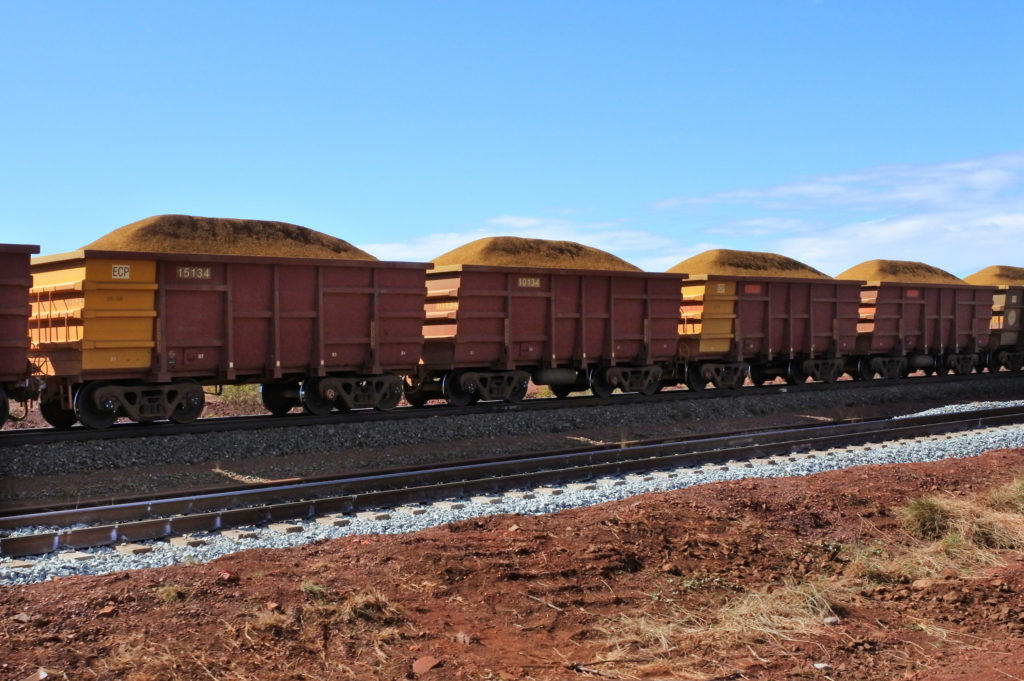
Global mining giant Rio Tinto is set to make history with the first-ever iron ore shipment from the Simandou project in mid-November, marking a transformative milestone for both the company and Guinea’s mining sector. According to sources cited by Reuters, the Anglo-Australian miner has stockpiled nearly 2 million tonnes of high-grade ore, ready for export — a move that signals the long-awaited start of operations at what is widely regarded as the world’s largest untapped iron ore deposit.
In its third-quarter production report, Rio confirmed that its SimFer joint venture—one of the two mining blocks at Simandou—had already amassed 1.5 million tonnes of ore, with the first rail transport commencing in October. The company emphasized that the project continues to progress “at pace,” as it prepares to begin loading ore for shipment to China, the world’s top steel producer and consumer of over 70% of global seaborne iron ore.
Strategic Infrastructure and Partnerships
Exports will initially move through infrastructure developed by Winning Consortium Simandou (WCS), Rio’s partner and operator of the project’s other mining block. WCS’s port facilities on Guinea’s Atlantic coast are nearing completion and are expected to handle the inaugural export cargo.
Simandou’s ownership structure underscores the scale of international collaboration involved. The project is jointly held by Rio Tinto and China’s state-owned Chalco on one side, and WCS, a Singaporean-Chinese consortium, on the other. Together, they have invested heavily in a 600-kilometre railway and deepwater port — infrastructure that will not only serve the mine but could also become a backbone for Guinea’s broader mining logistics.
Market Implications and Competitive Pressures
At full capacity, Simandou is projected to produce 120 million tonnes of iron ore annually, half of which will come from SimFer. This would increase global seaborne iron ore supply by nearly 9%, according to Panmure Liberum’s head of commodities, Tom Price, who cautioned that “iron ore prices could face downward pressure if Australian and Brazilian producers don’t adjust to Simandou’s ramp-up.”
Rio’s Chief Financial Officer, Peter Cunningham, echoed that sentiment earlier this year, noting that Simandou’s high-grade output could force higher-cost suppliers out of the market. With iron content averaging 65% Fe, Simandou ore is particularly attractive to Chinese steelmakers seeking to reduce carbon emissions and energy consumption amid tightening profit margins and sluggish construction demand.
Guinea’s Economic Turning Point
For Guinea, the project’s commissioning represents a turning point in its mineral development ambitions. The International Monetary Fund projects that Simandou could boost Guinea’s GDP by 26% by 2030, underscoring its significance as a catalyst for national growth and industrialization. The country’s transitional authorities plan to formally inaugurate the project on November 11, a symbolic date that may mark the dawn of a new era for West Africa’s mining powerhouse.
While both Rio and WCS have refrained from detailing the initial shipment volume, their parallel stockpiling efforts indicate a competitive race for early market share. As the first Simandou ore heads to sea, Guinea moves one step closer to realizing its long-held vision of becoming a global force in iron ore production — a development poised to reshape the global steel supply chain for decades to come.