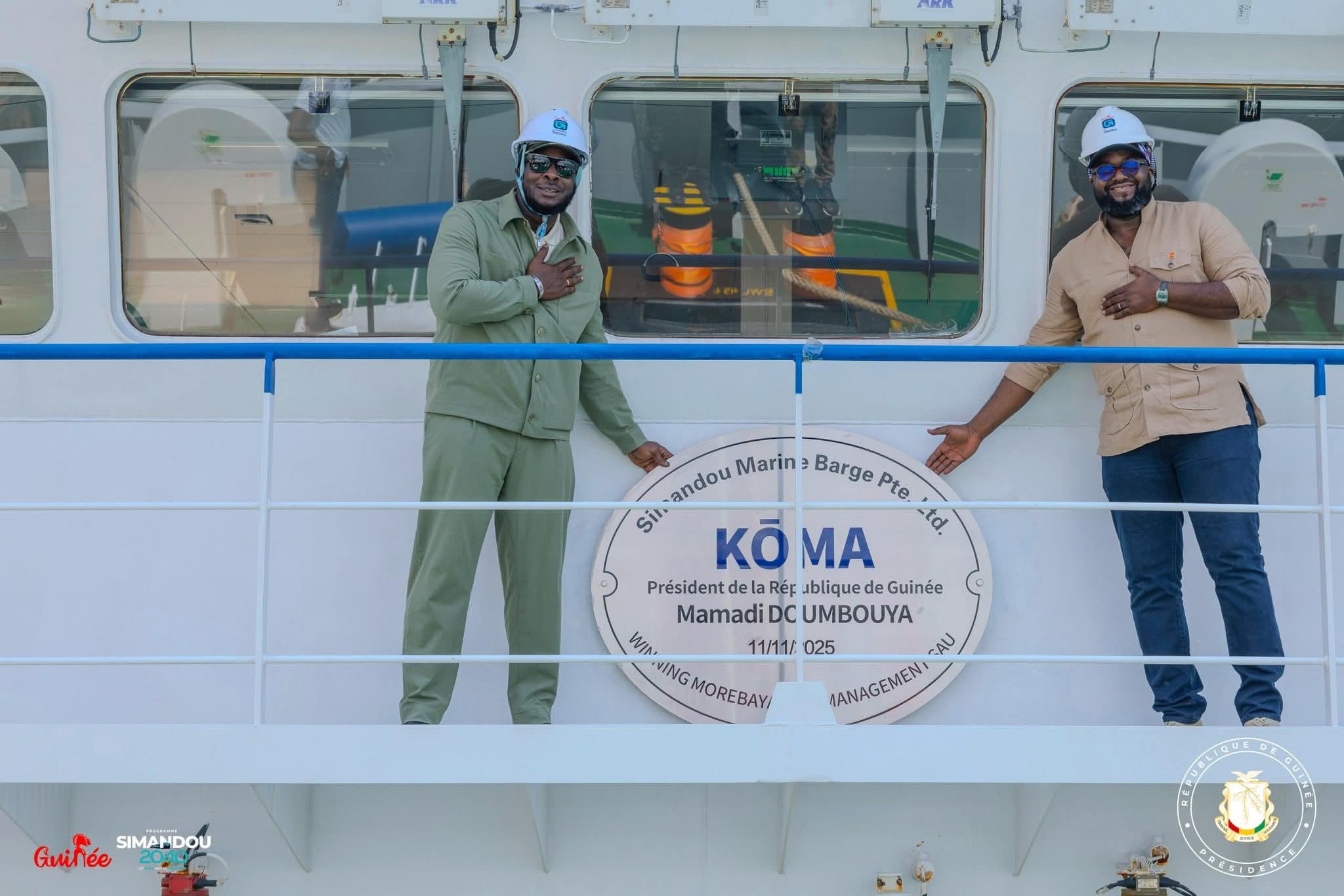
Guinea’s ambitious Simandou iron ore project has reached a historic milestone, with the first ore transport vessels officially received at the Port of Morebaya, Forécariah, on November 2, 2025. The ceremony, presided over by Djiba Diakité, Minister and Chief of Staff to the Presidency and Chairman of the Simandou Strategic Committee, marked the tangible beginning of the export phase for what is poised to become one of the world’s largest integrated iron ore mining and infrastructure developments.
The high-profile event brought together key government figures—including General Amara Camara, Secretary-General of the Presidency—alongside senior members of the Simandou Strategic Committee and representatives of the project’s industrial partners. Their presence underscored the strategic importance of Simandou to Guinea’s economic future and to the broader West African mining landscape.
A Turning Point for the Simandou Corridor
The arrival of these vessels at Morebaya confirms the operational readiness of key logistical components within the Simandou development corridor, a 600-kilometer integrated rail and port system being developed by the Compagnie du Transguinéen (CTG). The CTG is a joint venture between the Guinean State, Rio Tinto, China’s Baowu Steel Group, Winning Consortium Simandou (WCS), and SimFer—the latter being the Rio Tinto-led entity managing one of the two main mining blocks of the Simandou range.
This latest development follows SimFer’s earlier announcement that the first iron ore exports were targeted for November 2025. According to the company, significant progress has already been made on multiple fronts:
- 72 kilometers of railway track are now operational, connecting the SimFer mining site to the TransGuinean rail system at Kérouané.
- Major civil works at the port have advanced, with the access jetty completed and ready for the installation of conveyor systems.
- Locomotives have been successfully delivered, enabling early logistical testing and integration along the initial sections of the railway.
These achievements represent a coordinated acceleration in the project’s development schedule, reflecting both the technical capacity and financial commitment of the consortium partners.
Progressive Ramp-Up to Full Capacity
Once initial exports commence this month, SimFer plans a progressive production ramp-up over a 30-month period to reach full operational capacity. Early shipments will be routed through the WCS port, pending the completion of SimFer’s dedicated port facilities at Morebaya.
This phased approach reflects prudent project management, balancing operational readiness with ongoing infrastructure commissioning. It also signals growing confidence among investors and government stakeholders that Guinea’s long-standing ambition to commercialize its world-class iron ore reserves is becoming a reality.
Strategic Implications for Guinea’s Mining Sector
For Guinea, the operationalization of the Simandou corridor represents far more than a mining success—it is a national development catalyst. Once fully operational, the integrated rail and port infrastructure is expected to transform logistics across southeastern Guinea, reduce transport costs, and enable the export of high-grade ore to key markets, primarily in Asia.
From a policy perspective, the Government of Guinea has emphasized local content, transparency, and sustainable development as guiding principles for the project. The involvement of CTG—a public-private partnership structure—illustrates a model that could serve as a blueprint for future large-scale extractive projects in the country.
For mining companies and investors, the Simandou project sends a powerful signal: Guinea is consolidating its position as a competitive, infrastructure-ready mining destination. The accelerated progress of the TransGuinean railway and Morebaya port indicates improved logistical reliability, which has historically been a bottleneck for mineral exports in the region.
Looking Ahead
The first vessel arrivals at Morebaya symbolize a new chapter for Guinea’s mining industry—one defined by integration, scale, and strategic collaboration. As the Simandou corridor transitions from construction to operation, mining stakeholders should closely monitor developments in infrastructure governance, logistics coordination, and export capacity.
If executed successfully, Simandou could elevate Guinea into the ranks of the world’s top iron ore exporters within the next three years—reshaping the global supply landscape and positioning the country as a central player in the green steel value chain of the future.