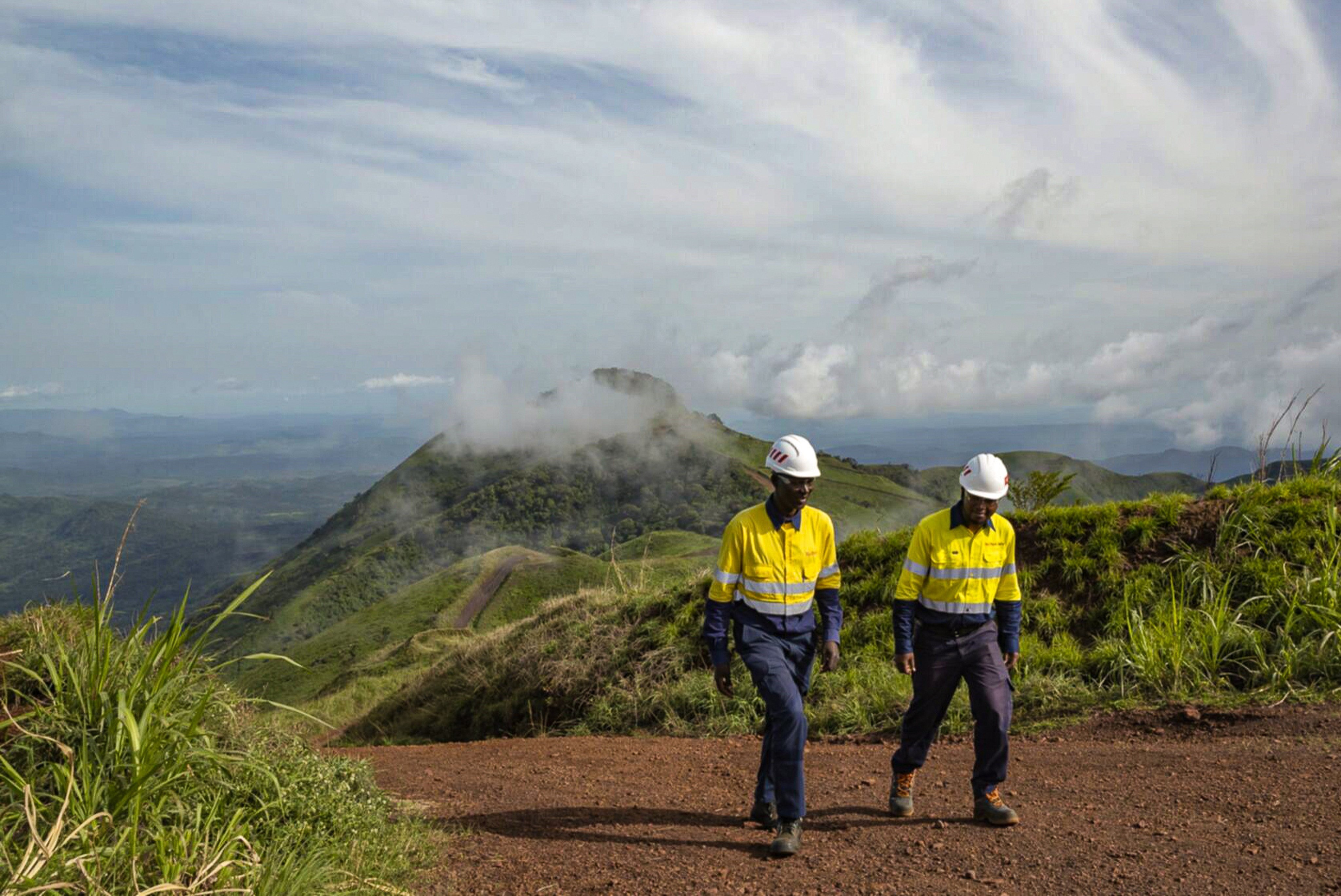
Guinea's Simandou iron ore project is implementing workforce reductions that will see employment levels plummet from over 60,000 workers during peak construction to fewer than 15,000 operational positions—a 75% reduction that highlights fundamental challenges in resource-led development strategies across emerging mining jurisdictions.
Construction-to-Operations Transition Creates Employment Cliff
The employment contraction at Simandou reflects the structural economics inherent in mega-mining projects, where simultaneous construction methodologies maximise capital efficiency whilst creating unsustainable employment peaks. Rio Tinto-Simfer's component alone is transitioning from 25,000 construction workers to approximately 6,000 operational employees, demonstrating the magnitude of workforce adjustments typical in world-class mining developments.
At peak construction during 2024-2025, the project employed approximately 7% of Guinea's total formal workforce, concentrated primarily in the remote Faranah region. The operational transition has resulted in particularly severe localised impacts, with the Dantilia hub near Sierra Leone's border experiencing 8,000 job losses from a 10,000-person workforce within three months. Along the 670-kilometre railway corridor, over 10,000 positions have been eliminated as infrastructure construction reaches completion.
Chris Aitchison, Managing Director at Rio Tinto-Simfer, acknowledged the structural challenge: "In other jurisdictions, demobilisation provides pathways for employees to transition to alternative projects. Guinea's economic structure offers no such alternatives, leaving displaced workers without viable employment options in their specialised skill areas."
Operational and Social Risk Implications
The rapid workforce reduction presents multiple operational challenges that extend beyond immediate employment concerns. Company risk assessments conducted in recent months have identified safety vulnerabilities including livestock incursions on railway infrastructure and potential derailment risks—issues requiring additional fencing not included in original project designs.
Reduced staffing levels create specific operational risks across maintenance capacity, emergency response capabilities, and safety monitoring for dispersed operations spanning remote terrain. The construction phase recorded 17 worker deaths and 5 resident fatalities from project-related incidents between June 2023 and November 2024, underscoring the importance of maintaining adequate safety resources during the operational transition.
The timing of mass layoffs preceding Guinea's December 28 presidential elections creates additional political pressure on the military government led by Mamady Doumbouya. Historical patterns in resource-dependent regions suggest elevated risks of community unrest, including potential railway blockades, facility protests, and broader social tensions in areas with limited alternative economic opportunities.
Market Dynamics and Project Economics
Simandou's expected annual output of approximately 120 million metric tons represents roughly 7% of global iron ore demand, positioning the project as a significant new supplier in international markets. The high-grade ore quality and strategic Atlantic coast location offer competitive advantages through premium pricing and reduced shipping distances to North American and European customers compared with Australian suppliers.
However, iron ore price volatility directly influences employment sustainability at operational mines. Price scenarios below $80 per tonne could necessitate minimal staffing and potential production suspensions, whilst sustained prices above $120 per tonne would support full operational employment and broader service sector growth in surrounding communities. Current market fluctuations within these ranges indicate that workforce levels may vary considerably based on conditions beyond host government control.
Government Response and Development Strategy
Guinea's Mines Minister Bouna Sylla has acknowledged the psychological and economic hardship of sudden job loss, though government mitigation strategies remain largely aspirational. The military government has proposed "Simandou 2040," a 15-year, $200 billion economic transformation strategy leveraging mining revenues to fund diversified development across agriculture, transport, technology, and manufacturing sectors.
Key strategy components include 3,000 kilometres of new highway infrastructure and investments in sectors capable of absorbing displaced workers. However, implementation faces substantial constraints including funding gaps, limited institutional capacity, political uncertainty affecting continuity, and revenue volatility tied to iron ore market fluctuations.
Guinea holds a 15% equity stake in Simandou, providing revenue streams for development financing. Whether this ownership percentage proves sufficient for funding a $200 billion transformation remains uncertain, particularly given that the International Monetary Fund projects Simandou will boost real GDP by 26% by 2030 whilst poverty reduction may improve by only 0.6 percentage points without active policy intervention.
Implications for Resource Development Models
The Simandou experience illuminates broader challenges facing resource-rich developing nations seeking to translate mineral wealth into sustainable prosperity. Despite Guinea ranking as the world's largest bauxite exporter and preparing to become a major iron ore supplier, over 50% of the population remains in poverty according to 2025 World Bank data—demonstrating the disconnect between resource extraction and broad-based development outcomes.
Alternative development approaches could include value-added processing integration, such as domestic steel production facilities, mining equipment manufacturing, and expanded port operations serving broader West African mineral exports. Regional economic integration through transport corridor development and cross-border supply chain networks could diversify employment beyond single-project dependence.
Successful resource development in emerging jurisdictions requires institutional capabilities that many nations currently lack, including mandatory workforce transition planning, staged reduction schedules allowing gradual transitions, and transparent revenue management systems with counter-cyclical spending strategies. Local content development must align skills training with operational rather than construction employment needs whilst supporting independent business development.
Industry Perspective
The Simandou workforce transition represents a well-documented challenge in global mining development where construction employment peaks cannot be sustained through operational phases. The 82% Guinean composition of Rio Tinto-Simfer's workforce indicates intentional local hiring policies, though these same policies amplify social impacts when subsequent reductions occur in regions with minimal economic diversification.
The critical question for mining companies and host governments is whether traditional development models can be reformed to balance extraction efficiency with sustainable employment creation. Future projects may require reimagining relationships between international mining operators, host governments, and local communities to prioritise human capital development, institutional strengthening, and economic diversification as integral project components rather than secondary considerations.
For Guinea, the challenge extends beyond efficient iron ore extraction to building institutional capacity and economic diversity that can sustain prosperity throughout commodity price cycles and beyond individual project lifespans—a test case for resource-led development strategies across emerging mining jurisdictions globally.