The dispute surrounding the former Axis Minerals permit in Guinea has taken a new turn, exposing uncertainties in regulatory enforcement and raising alarm among mining operators and investors. The situation, which pits AGB2A-GIC, SD Mining, and the Ministry of Mines against a backdrop of an unresolved international legal battle, is now testing Guinea’s commitment to transparent and predictable governance in the mining sector.
On 6 November 2025, the Ministry of Mines issued an order instructing AGB2A-GIC and SD Mining to withdraw all equipment from the ex-Axis Minerals perimeter no later than 10 November. The directive, signed by Secretary-General Aboubacar Kourouma, was justified by the ongoing litigation between the Guinean state and Axis Minerals in U.S. courts. According to ministry officials, a complete freeze of activity was necessary until the dispute is clarified, particularly to avoid exposing the state to additional legal or financial liabilities.
However, the order immediately generated operational and financial shockwaves. AGB2A-GIC reports that over 3,000 direct jobs and more than USD 300 million in private investment are now at risk. Since being forced to halt operations in May 2025, the company has repeatedly proposed an amicable settlement to the government, including a USD 250 million payment—half of which would be disbursed immediately and the remainder spread over six months.
Crucially, the company has also requested authorization to commercialize the six million tonnes of bauxite currently stockpiled at the site, a move that would allow it to recover part of its sunk costs while ensuring continuity for employees and contractors. AGB2A-GIC has reiterated its commitment to pay USD 2 per exported tonne to the Guinean state, as stipulated in its original sublease agreement with Axis Minerals.
Unequal Enforcement Raises Flags
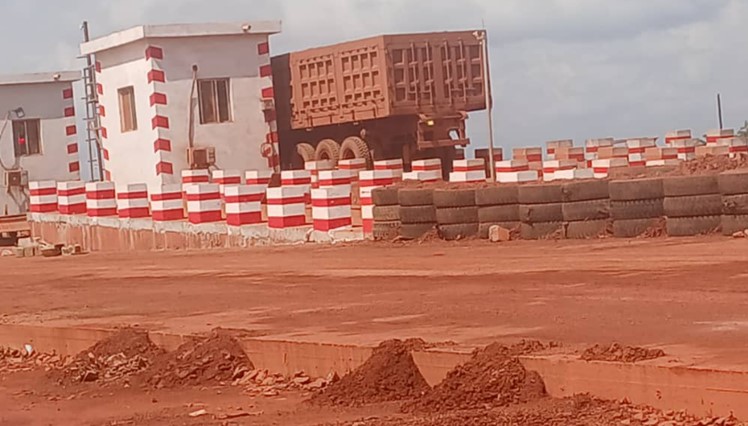
Despite the ministry’s injunction targeting both operators, emerging evidence suggests that SD Mining continues to maintain active operations on the disputed site. Newly installed site markers bearing the label “SDM” have been identified, and export activities reportedly continue from the Kokaya port. These developments contradict the ministry’s instructions and have triggered widespread concerns among sector observers.
A technical inspection had been scheduled for 14 November to confirm the withdrawal of equipment, but the visible continuation of SD Mining’s activity casts doubt on the uniform enforcement of the directive. For AGB2A-GIC, which has been unable to remove or commercialize its stockpiles for more than six months, the apparent discrepancy in enforcement amounts to discriminatory treatment.
Industry actors, speaking on condition of anonymity, argue that unequal application of decisions undermines investor confidence. The fact that the permit has not yet been officially reassigned intensifies the controversy, while SD Mining’s continued presence—despite official instructions—has revived earlier accusations of favoritism linked to a memorandum of understanding that was first announced and later rescinded by the ministry.
Implications for Guinea’s Mining Sector
For mining companies operating in Guinea, the dispute highlights three critical risks:
- Regulatory Uncertainty:
Clear, consistent enforcement of ministerial decisions is central to maintaining a predictable operating environment. Perceived inconsistency can deter long-term investments and complicate partnerships with international financiers who require regulatory clarity. - Operational Disruption Costs:
The forced shutdown of AGB2A-GIC’s activities illustrates the financial consequences companies face when disputes involving third parties spill over into their own operational perimeters. With millions of tonnes of bauxite immobilized, cash flow disruptions risk cascading into contractor defaults and job losses. - Reputational and Governance Risks:
As Guinea continues positioning itself as a global bauxite hub, transparency in permitting decisions remains essential. Any doubt about equal treatment between companies—especially those backed by foreign investors—may fuel perceptions of inconsistent governance at a time when the country is seeking to attract downstream refining projects and infrastructure investments.
AGB2A-GIC is now urging authorities to clarify the situation swiftly and ensure fair treatment for all operators. The company argues that either both firms must cease activities pending resolution of the Axis Minerals case, or both must be allowed temporary operational flexibility under a transparent interim framework.
The broader mining industry is watching closely. Investors and operators alike emphasize the need for predictable and impartial decision-making, especially when dealing with high-stake assets and contracts tied to international legal disputes.
As the situation evolves, the government’s handling of this affair may become a defining test of institutional reliability for Guinea’s mining sector—one that could influence investment decisions across bauxite, iron ore, and emerging critical minerals projects in the coming years.