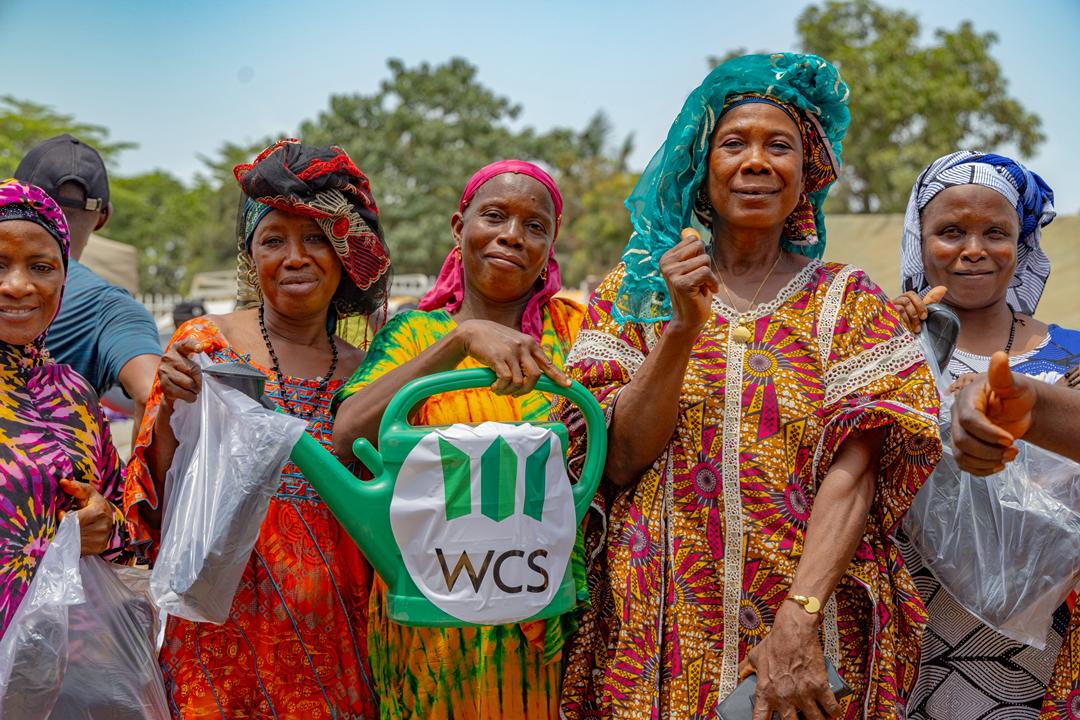
The Winning Consortium Simandou Port (WCSP) has marked International Women's Rights Day with a tangible community investment initiative, distributing agricultural equipment to 17 women's associations operating within communities impacted by the Simandou iron ore and port project in Guinea's Forecariah Prefecture.
The distribution ceremony, held at the Maferinyah town hall, saw WCSP's community department deliver a total of 430 pairs of boots, 430 pairs of gloves, and 110 watering cans to female agricultural groups drawn directly from the project-affected communities. The delegation was led by Mr. Lu Xiangdong, Deputy General Manager, and Mr. Liu Shoujiang, Assistant General Manager, alongside local administrative authorities from both Forecariah and Maferinyah.
The initiative underscores WCSP's broader social licence strategy for the Simandou project — one of the most consequential iron ore developments currently under construction globally. By channelling support toward income-generating agricultural activities, the consortium is advancing a community development model that seeks to offset project-related disruptions with measurable livelihood improvements for affected populations.
For mining operators and investors tracking the Simandou development, WCSP's approach reflects an increasing industry emphasis on structured community benefit-sharing frameworks, particularly in relation to project-affected communities (PACs). Targeting women's economic empowerment specifically aligns with international financing standards — including IFC Performance Standards and Equator Principles — which increasingly require demonstrable, gender-sensitive social investment programmes as a condition of project compliance.
The Simandou project, widely regarded as the world's largest untapped high-grade iron ore deposit, is advancing under a multi-consortium structure. WCSP is responsible for the transhipment port and associated rail infrastructure corridor, serving as a critical logistics enabler for ore export. The project's development corridor traverses communities across multiple prefectures, making robust stakeholder engagement a non-negotiable operational requirement.
The involvement of 17 associations aggregating hundreds of women across the project footprint signals that WCSP is working to build structured, multi-community engagement mechanisms rather than ad hoc outreach — a distinction that will be closely scrutinised by both regulators and international financiers as the project advances toward production milestones.
As construction activity intensifies across the Simandou corridor, community relations programmes of this nature will remain central to WCSP's social performance reporting. Sustaining agricultural productivity and economic resilience within project-impacted zones is widely recognised as a mitigant against community grievances that can otherwise translate into operational disruptions.
For stakeholders monitoring Guinea's mining sector, WCSP's Women's Day initiative represents a relatively modest but symbolically significant step toward embedding long-term community development commitments within the operational fabric of what promises to be a transformative project for Guinea's extractive industry landscape.