


The Boké region sits at the centre of Guinea’s bauxite boom. Rapid expansion of large-scale operations (SMB, CBG and others) has driven foreign exchange and infrastructure investment, but it has also produced persistent tensions over land, livelihoods, health and the distribution of mining rents. For mining companies, government agencies and development partners the central challenge is clear: how to convert mineral wealth into durable local development rather than episodic, uneven benefits.
What’s driving the social stress
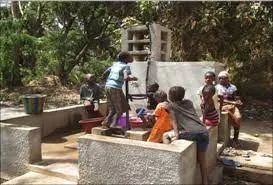
Bauxite extraction in Boké is highly capital- and export-oriented. That creates three predictable pressures on communities: (1) land-take for pits, rail and port infrastructure that reduces farmland and fisheries; (2) air and water pollution (dust, sediment and contaminants) that degrades health and crops; and (3) an economic structure that channels most value out of the region unless deliberate local-value measures are enforced. These dynamics have produced protests, unresolved compensation claims and recurring complaints about inadequate remediation and access to clean water.
What’s been tried and where it falls short
Companies and multilateral partners have developed Community Development Plans (CDPs), Local Content Plans, and stakeholder engagement processes; the Compagnie des Bauxites de Guinée (CBG) and others publish environmental and social impact assessments and periodic monitoring reports. International finance and development actors have also supported infrastructure projects in the region. However, independent audits and civil-society reports point to gaps: compensation often under- or delayed, weak grievance mechanisms, limited transparency of local development funds, and inconsistent monitoring of environmental commitments. Governance and implementation capacity at municipal and customary levels remain a constraint.
Recent political context that matters
Since 2024–2025, Guinea’s authorities have taken a more assertive posture on mining — revoking or renegotiating concessions and pushing for greater local processing (refineries, alumina plants). That policy shift raises both opportunity and risk for Boké communities: on one hand, downstream investment could create local jobs and multiplier effects; on the other, abrupt licence changes or politicized enforcement can accelerate uncertainty and social friction unless transitions are managed transparently.
Practical recommendations to shift outcomes
- Reform benefit-sharing with transparency. Local development funds (and company CDPs) should publish budgets, procurement data and project outcomes in accessible formats; independent audits must be routine so communities can hold actors to account.
- Strengthen grievance and land-rights processes. Well-resourced, independent grievance mechanisms with clear timelines for compensation and remediation reduce escalation. Embed customary leaders and women’s representatives to ensure inclusivity.
- Prioritise livelihoods and environmental mitigation together. Rehabilitate agricultural land, finance alternative livelihoods (irrigation, aquaculture, small agribusiness) and secure potable water. Environmental monitoring should be independent, publicly available and use community sampling where feasible.
- Local content that is realistic and time-bound. Skills development, supplier-development programmes and phased local procurement targets help avoid tokenism. Tie local content clauses to measurable training and procurement milestones.
- Coordinate across levels of government and donors. Mining companies, municipalities, national agencies (e.g., ANAFIC/FODEL-type mechanisms) and donors should align on a medium-term development plan for Boké to avoid project fragmentation and to amplify impact.
Conclusion
Boké’s bauxite presents a genuine development opportunity for Guinea. Converting that opportunity into resilient local development requires shifting attention from single-project philanthropy to systems: transparent benefit-sharing, effective grievance and land processes, measurable local content, and credible independent environmental monitoring. When those elements work together—backed by trustworthy institutions—mining can deliver not only revenues but also healthier, more diversified local economies. If they do not, social conflict and environmental damage will continue to undermine both local livelihoods and the sector’s licence to operate.